A cold oven halfway through dinner, a grill that will not switch off, or food that is burnt on one shelf and undercooked on another creates the same immediate question: is my oven worth repairing or should you replace it? The answer is rarely just about the headline price of a new appliance. Its age, the fault, the condition of the cooker and the quality of the diagnosis all matter.
For many households, an oven repair is the quicker and better-value route. A single failed component can make an otherwise reliable appliance appear beyond saving. Equally, spending money on an ageing oven with repeated faults is not always sensible. A professional assessment gives you the facts before you commit either way.
Is my oven worth repairing? Start with age and condition
Most built-in electric ovens are designed to last around 10 to 15 years, although maintenance, usage and build quality make a real difference. A well-made oven that is seven years old and has developed one clear fault is usually a strong repair candidate. An oven approaching 15 years old, with corroded racks, worn door seals, unreliable controls and more than one recent breakdown, needs a closer cost comparison.
Age alone should not decide it. Premium appliances can justify repair later in their lifespan because their replacement cost is higher and parts may remain available for longer. On the other hand, an inexpensive oven may not be worth a major repair if the required part and labour represent a large proportion of the cost of a suitable replacement.
Look beyond the current fault. Has the oven performed reliably until now? Does the door still close firmly? Is the enamel interior in reasonable condition, with no serious rust or flaking? Are the hob and other cooker functions working properly? If the answer is yes, repairing one failed part can extend the appliance’s useful life considerably.
Compare the repair quote with the real replacement cost
A common rule is to consider replacement when a repair costs more than half the price of a comparable new oven. It is a helpful starting point, but not a hard rule. A replacement may also require delivery, installation, disposal of the old unit, alterations to cabinetry or electrical work. Those costs can change the calculation quickly.
Compare like for like. Replacing a fan oven with a basic model may look cheap, but it could mean losing functions you use every week, such as pyrolytic cleaning, telescopic shelves, steam settings or precise temperature control. If you want an equivalent model, the replacement cost may be far higher than the first price you see online.
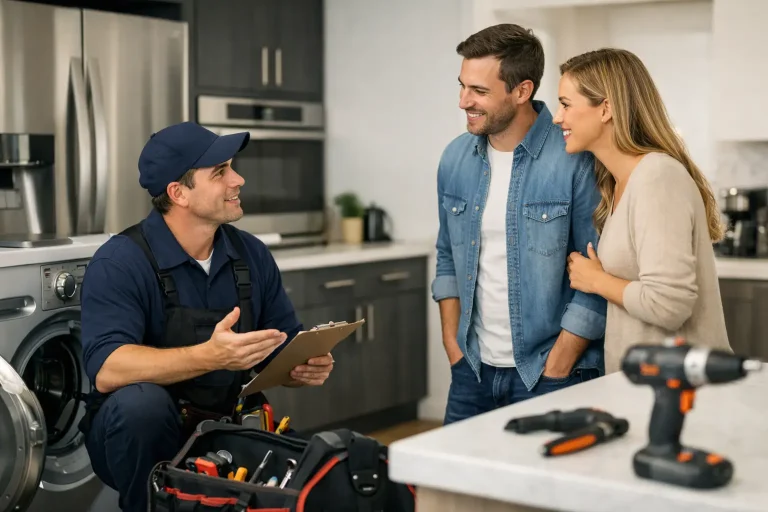
A clear diagnostic visit should identify the failed part, confirm whether parts are available and give you a fixed repair price before work proceeds. That turns a guess into a practical decision. It also prevents the frustration of buying a replacement when the original fault was a relatively straightforward heating element or thermostat issue.
Faults that are often worth repairing
Many oven problems are isolated component failures rather than signs that the entire appliance has reached the end of its life. In a sound, mid-life oven, these faults are frequently economical to repair:
- A failed fan oven element, which can leave the oven cold or cause it to trip the electrics.
- A faulty thermostat or temperature sensor, causing overheating, poor cooking results or inconsistent temperatures.
- A worn door seal, loose hinge or damaged door catch, allowing heat to escape.
- A failed cooling fan, oven fan motor, selector switch or control knob.
- An oven light, timer or display fault where the main cooking functions remain reliable.
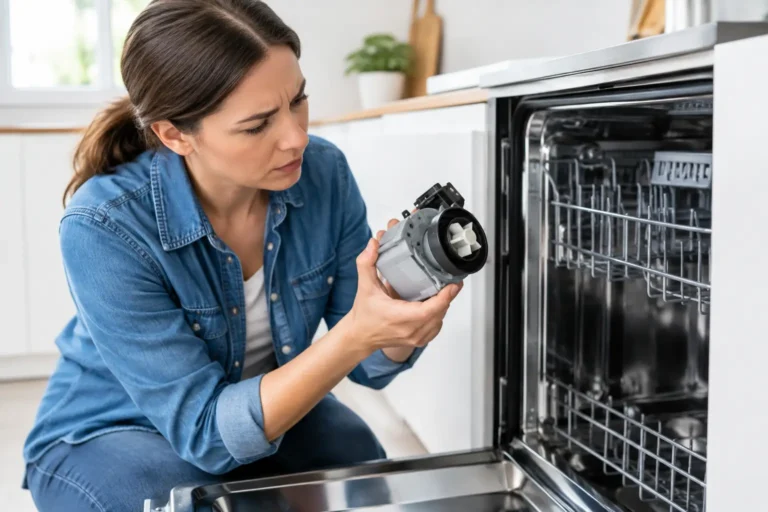
The same symptom can have different causes. For example, an oven that is not heating may have a failed element, but it could also have a wiring issue, a faulty function selector or an electronic control board problem. Replacing parts without proper testing can waste money and leave the underlying fault unresolved.
When replacing the oven may be the better call
Replacement becomes more attractive when the oven has several faults at once or when a major, expensive component has failed in an appliance near the end of its expected life. A damaged control board can be worthwhile on a newer premium model, but harder to justify on an older appliance where another part may fail shortly afterwards.
Visible deterioration matters too. Severe internal rust, damaged enamel around the cavity, a warped door, recurring electrical trips or deteriorated wiring are not issues to ignore. An engineer can advise whether repair is safe and viable, but there are occasions when putting further money into the appliance is simply not the responsible option.
Parts availability is another practical limit. Manufacturers may stop supplying components for older models. A second-hand or non-genuine part can appear tempting, yet it may not offer the fit, reliability or safety expected from an oven repair. If a genuine critical part is obsolete, replacement may be the only realistic route.
Do not overlook energy use and cooking performance
New ovens can offer better insulation, improved temperature accuracy and lower running costs. That benefit is real, especially if you cook frequently. It should still be weighed against the environmental and financial cost of replacing a repairable appliance.
A faulty door seal or inaccurate thermostat does not automatically mean the oven is inefficient forever. Repairing those parts can restore heat retention and performance at a fraction of replacement cost. By contrast, if your oven has always heated unevenly, takes a long time to reach temperature and has needed several repairs, a modern replacement may deliver a noticeable improvement in daily use.
If you are a landlord, reliability is often as important as energy efficiency. A quick, documented repair on a good appliance can avoid unnecessary disruption for tenants. If repeated call-outs are becoming routine, replacement can be the more predictable option for the property and your maintenance budget.
Safety comes before cost
Stop using the oven and arrange an assessment promptly if it repeatedly trips the consumer unit, gives off a burning smell, produces sparks, has exposed wiring or will not switch off. Do not keep resetting a tripping circuit to finish a meal. Electrical faults require proper investigation, not trial and error.
Gas cookers need extra caution. If you smell gas, turn off the supply if it is safe to do so, ventilate the property, avoid flames and electrical switches, and follow the emergency guidance from your gas supplier. Gas appliance work must be carried out by a suitably qualified Gas Safe engineer.
For electric ovens, the correct repair starts with isolating the appliance safely and testing the relevant components. A qualified engineer will check more than the part that appears faulty, including connections and signs of heat damage where appropriate.
A simple way to make the decision
Before booking a replacement, gather the model number, approximate purchase date and a clear description of what the oven is doing. Note whether it heats at all, whether one function works while another does not, whether it trips the electrics and whether the problem is constant or intermittent. These details help an engineer arrive prepared and can speed up diagnosis.
Then ask three straightforward questions: Is the fault isolated? Is the appliance otherwise in good condition? Does the quoted repair offer sensible value against an equivalent replacement, including fitting costs? If the answers are yes, repair is usually the practical choice.
For households in West London dealing with an urgent oven fault, a same-day in-home diagnosis removes much of the uncertainty. CrownTech Appliances provides fixed-price quotes before repair work, a no-fix-no-fee policy and a 12-month written parts and labour warranty, so you can make the decision with a clear view of the cost and protection offered.
A broken oven does not always mean a new oven. Get the fault identified first, weigh the quote against the appliance’s condition and replacement costs, and choose the option that gives your kitchen dependable service rather than the quickest-looking answer.