A dishwasher that stops mid-cycle is more than an inconvenience when plates are piling up after breakfast and the kitchen needs to function. This dishwasher repair service guide helps you identify the likely issue, carry out a few safe checks and decide when a professional repair is the sensible next step.
For busy households, tenants and landlords, the priority is not simply getting the machine running again. It is knowing what has failed, what the repair will cost, and whether the work will last. A proper diagnosis avoids wasted parts, repeat call-outs and the false economy of replacing an appliance that still has years of useful service left.
Dishwasher repair service guide: start with safe checks
Before inspecting anything, switch the dishwasher off at the mains. If there is water on the floor, avoid touching plugs or sockets and isolate the electrical supply first. Never remove panels, interfere with wiring or force a component into place. Dishwashers combine water, heat and electricity, so a minor-looking fault can become unsafe quickly.
A few checks can rule out straightforward causes. Confirm that the door closes firmly and that no large pan or rack is preventing the latch from engaging. Check the water supply valve is open and the inlet hose is not kinked. Clean visible food debris from the filter in the base of the machine, following the manufacturer’s instructions, and make sure the drain hose has not been crushed behind the unit.
If the appliance displays an error code, take a photograph before resetting it. The code, model number and a clear description of when the fault happens give an engineer a useful starting point. For example, a machine that fills but does not wash points towards different components than one that trips the electrics as soon as it is switched on.
Do not keep restarting a failed programme in the hope it will clear. Repeated attempts can leave standing water in the base, place extra strain on a failing pump or cause an underlying leak to worsen.
Common dishwasher faults and what they usually mean
The dishwasher will not start
If the control panel is lit but nothing happens, the door latch or lock mechanism may not be registering as closed. Some models also pause because of a delayed-start setting or a child lock. Check the manual for the relevant symbol, then try cancelling the programme once.
No lights at all may point to the power supply, internal wiring, control board or a failed on/off switch. If sockets, fuses or circuit breakers are involved, stop there. An engineer should test the appliance safely rather than guess at an electrical fault.
The dishwasher is not filling with water
A dishwasher that hums but remains dry may have a closed water valve, obstructed inlet hose or blocked inlet filter. If those external checks are clear, likely causes include an inlet valve fault, pressure issue or control fault.
Modern Bosch, Siemens, Neff and Miele machines may show a specific code for water intake problems, but codes are not a complete diagnosis. A restriction, leak detection system or sensor fault can produce similar symptoms. Replacing a part based on a code alone is a common and expensive mistake.
Water remains in the bottom after a cycle
This is one of the most common call-out reasons. Start by removing and cleaning the filter. Small bones, labels, glass fragments and food debris can restrict drainage. Check whether the kitchen sink is also draining slowly, as a blockage in shared waste pipework can affect the dishwasher.
If the filter is clean and water still remains, the drain pump may be obstructed or worn, the drain hose may be blocked, or the appliance may not be detecting the correct water level. Do not tip the dishwasher backwards to empty it. This can damage flooring, create an electrical risk and move water into areas where it should not be.
Dishes come out dirty, cloudy or greasy
Poor washing performance is not always a mechanical failure. Overloading, blocked spray arms, the wrong detergent setting and low rinse aid can all affect results. Remove the spray arms only if your model’s instructions make this clear, then rinse their holes under a tap and check they rotate freely once refitted.
If cleaning remains poor despite correct loading and a clean filter, the machine may have a circulation pump, heater or temperature-sensor problem. A dishwasher that washes in cold water may complete a programme yet leave greasy residue behind. That requires testing, not trial-and-error part replacement.
The dishwasher leaks or trips the electrics
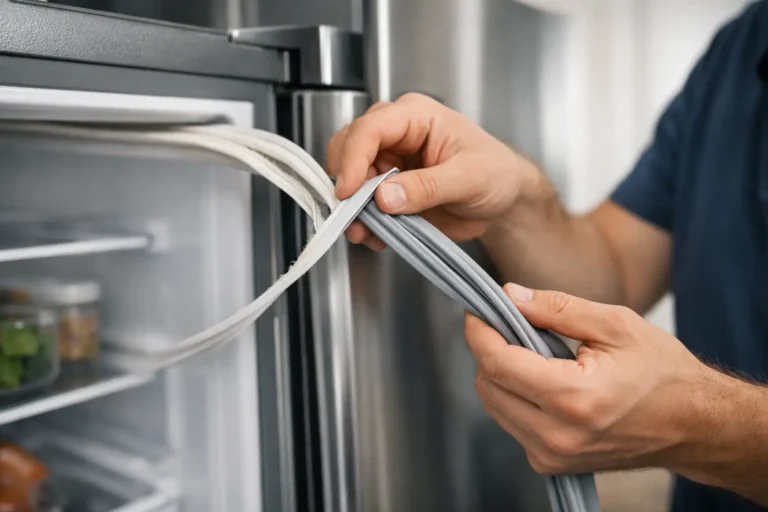
Treat both faults as urgent. Turn the appliance off, isolate the power and close the water supply if it is safe to do so. A damaged door seal, loose hose, split sump, faulty pump or excess foam from unsuitable detergent can cause a leak. Water in the base may also trigger an anti-flood system, leaving the dishwasher unable to start.
If the consumer unit trips, do not reset it repeatedly with the dishwasher connected. The fault could involve a heater, motor, wiring or moisture affecting an electrical component. Professional electrical testing is the right route.
When to repair and when replacement makes more sense
Repair is often the better value option when the dishwasher is under ten years old, has otherwise been reliable and needs a defined part such as a pump, valve, latch or heater. Quality built-in models can be particularly worth repairing because replacement also involves fitting work, cabinet alignment and possible changes to plumbing connections.
Replacement becomes more reasonable when a machine has several major faults, suffers repeated breakdowns, has significant corrosion or has parts that are no longer available. Age matters, but it is not the only factor. An eight-year-old premium machine with a single pump fault may be a far better repair candidate than a cheaper model with a failed control board and a history of leaks.
Ask for a diagnosis before authorising work and expect the options to be explained plainly. A fixed-price quote should set out what is included, whether parts are genuine or manufacturer-approved, and what warranty applies to the repair. The cheapest estimate is not necessarily the lowest-cost outcome if it excludes the required part, offers no written guarantee or fails shortly afterwards.
What a professional dishwasher repair visit should include
A reliable service begins with practical information: the make and model, fault symptoms, error code if shown, and whether the appliance is integrated or freestanding. This helps the engineer arrive prepared and reduces avoidable delays.
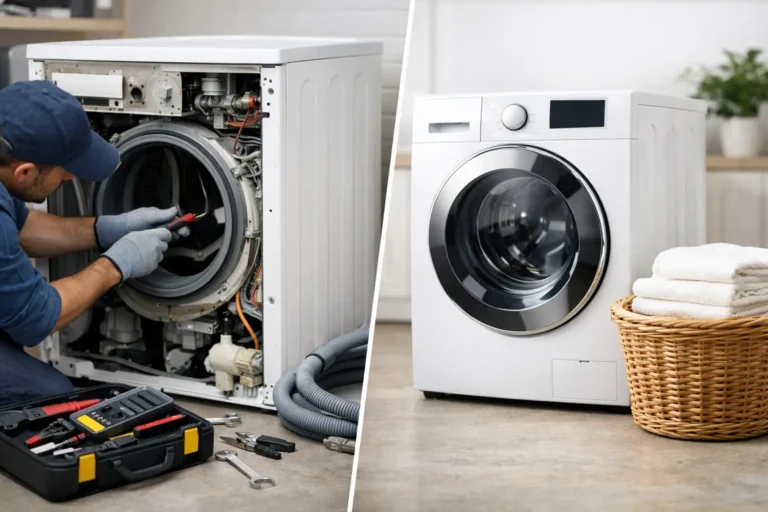
On site, the engineer should inspect the appliance, test relevant components and identify the actual cause rather than merely clear the symptom. That might include checking water flow, drainage, heating, circulation, sensors, door locking and electrical readings. Once the fault is confirmed, you should receive a clear explanation of the repair, cost and expected outcome before work proceeds.
CrownTech Appliances provides same-day in-home repairs across West London where availability allows, with certified, DBS-checked engineers, a 90-minute arrival window, fixed-price quotes and a no-fix-no-fee policy. Repairs are backed by a 12-month written parts and labour warranty, giving households and property managers a clear record of the work completed.
How to prevent avoidable dishwasher problems
Good maintenance will not prevent every component failure, but it can reduce blockages and keep wash performance consistent. Clean the filter regularly, particularly in busy family kitchens. Wipe the door seal, use dishwasher detergent rather than washing-up liquid, and run an occasional hot maintenance cycle with a suitable cleaner.
Avoid packing the machine so tightly that spray arms cannot turn. Scrape heavy food residue into the bin, but there is no need to pre-rinse every plate under running water. If you live in a hard-water area, keep salt and rinse aid topped up according to your dishwasher’s settings. This helps control limescale around heating components and supports better drying.
A dishwasher should make kitchen life easier, not create a recurring source of disruption. If a fault involves leaking water, electrical tripping, persistent drainage problems or a machine that will not complete a cycle, arranging a qualified diagnosis early usually protects both the appliance and your home.