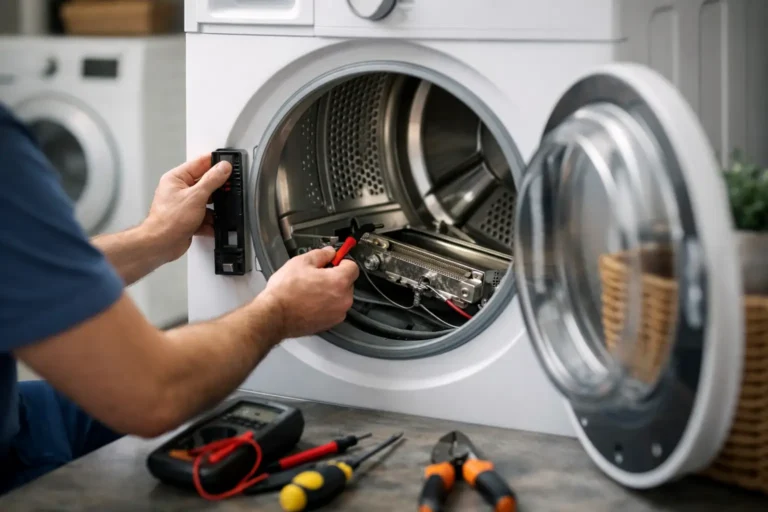
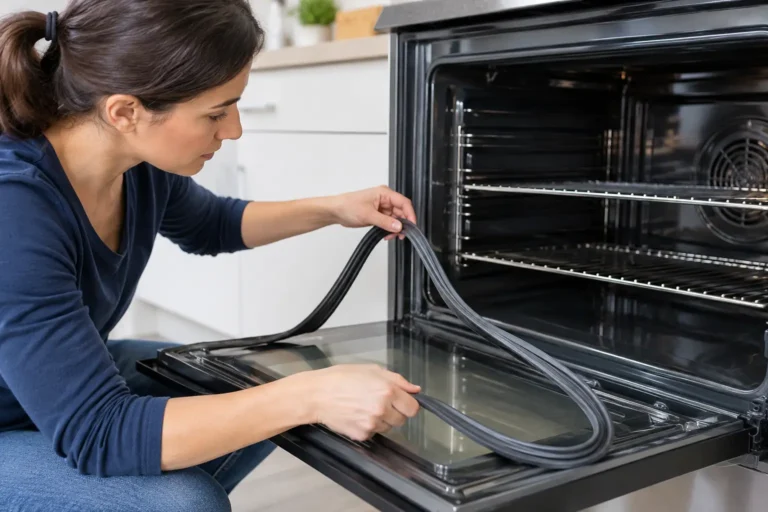
A puddle at the front of the washing machine is disruptive, but it does not automatically mean the appliance needs replacing. To stop a washer door leaking, first identify whether water is escaping from the door seal, the detergent drawer, or elsewhere and travelling forwards. That distinction prevents wasted money on the wrong part and helps you decide whether a simple clean is enough.
If water is actively leaking, switch the machine off at the wall, unplug it if the socket and surrounding floor are dry, and turn off the water supply if you can do so safely. Put down towels before investigating. Do not run another wash to “see if it happens again” while water is close to electrical connections.
Start by finding where the water begins
Dry the outside of the machine and the floor, then look closely at the door area. A door leak usually shows as water emerging from the bottom or sides of the glass, often during filling, tumbling or the final spin. Water starting higher up may be coming from an overfilled detergent drawer or a hose at the back, then running down the cabinet.
The timing also matters. A leak as soon as the wash begins can point to the door not sealing properly. A leak only on spin may indicate an overloaded drum, a damaged seal that opens under movement, or a machine that is not level. If the floor is wet only after the cycle has finished, check the pump filter and drain hose as well.
How to stop a washer door leaking: safe checks first
Most front-loading machine door leaks are caused by a blocked, dirty or damaged door seal, also called the gasket. The flexible rubber ring needs to sit evenly against both the door glass and the outer drum. Even a small obstruction can leave a channel for water to escape.
Open the door and gently pull back the folds of the seal. Check carefully for coins, hair grips, tissues, small socks, pet hair, detergent residue and trapped clothing fibres. These are common causes of leaks, particularly in busy family homes where small items can slip past the drum.
Wipe the seal with a clean damp cloth, then dry it. Pay particular attention to the lower section, where water and debris collect. If there is black mould or a greasy film, use a manufacturer-approved cleaner or a mild solution suitable for appliance rubber. Avoid harsh bleach, abrasive pads and sharp tools. They can weaken the rubber and turn a cleaning job into a seal replacement.
While the door is open, inspect the rubber closely under good light. Look for splits, holes, loose sections, distortion or a seal that has come away from its retaining band. A damaged gasket will not reliably hold water, and tape or sealant is not a safe long-term repair. The seal must be replaced and fitted correctly.
Check the door glass too. A chip around the edge, a crack, or a stubborn build-up of limescale can prevent a proper seal. Then close the door slowly and confirm that it latches firmly. If you need to lift the door to make it click shut, the hinge, catch or lock may be worn or misaligned.
Check the simple causes that often get missed
An overloaded machine can force laundry against the door and push water past a seal that would otherwise cope. Leave enough space at the top of the drum to place a hand above the washing. Heavy items such as bath mats, towels and bedding should be washed according to the manufacturer’s load guidance, rather than packed tightly into one cycle.
Too much detergent is another frequent culprit. Excess suds can rise above the normal wash level and escape through weak points around the door or drawer. Use detergent designed for automatic washing machines and measure it for the load size, soil level and local water hardness. More detergent does not make clothes cleaner once the recommended amount has been reached.
A machine that rocks on spin can also cause apparent door leaks. Press each top corner of the appliance. If it moves, adjust the feet until it sits stable and level, then tighten the locking nuts if your model has them. Do not wedge cardboard, wood or towels underneath. An unstable machine places extra strain on the door, hoses and internal components.
It is also worth checking the drain pump filter, provided your instruction manual permits it and you are prepared for water to spill. A partial blockage can affect draining and create unusual water levels. With the machine isolated, place shallow trays and towels beneath the filter cover, drain any residual water through the emergency hose where fitted, and remove debris from the filter. Refit it securely before testing the appliance.
When the problem is not the door seal
A leak at the front can be misleading. If the door seal looks intact and the door closes correctly, inspect the detergent drawer. Dried detergent can block the drawer channels, causing water to overflow down the front of the machine during filling. Remove the drawer where possible, rinse it thoroughly and clean the compartment above it.
The inlet hoses at the rear and the connections to the detergent dispenser can also leak intermittently. So can a split internal hose or a cracked soap dispenser housing. These faults generally need a proper diagnosis because removing panels exposes electrical parts, sharp edges and components that must be reassembled correctly.
On some models, the door lock itself can fail to hold the door tightly enough during a cycle. The machine may still start, but the pressure on the gasket is not consistent. A loose hinge, worn catch or distorted door frame can produce the same symptom. These are repairable issues, but they are not suitable for forcing into place or tightening at random.
Test the machine without risking more damage
After cleaning the seal, checking the load and confirming the filter is secure, run a short rinse cycle with the drum empty. Stay nearby and watch the door, drawer and lower front panel throughout. Do not use a high-temperature programme for the first test.
If the machine remains dry, run a small, normal load next. If water returns, stop the programme, isolate the appliance and arrange a repair. Continuing to use a leaking washer can damage flooring, kitchen units and ceilings in flats, as well as increasing the risk of electrical damage.
Take a clear photograph of the leak location and note when it occurs: filling, washing, draining or spinning. This information helps an engineer narrow down the fault before replacing parts. It can also help distinguish a failed gasket from a dispenser, pump or hose issue.
When to book a washing machine repair
Book professional help promptly if you can see a torn seal, the door will not latch securely, water appears from behind the front panel, or the leak persists after basic cleaning and a small-load test. You should also avoid using the appliance if it trips the electrics, smells burnt, makes grinding noises or leaves a substantial pool of water.
For tenants and landlords, reporting a persistent leak early is usually far cheaper than dealing with damaged laminate, skirting boards or a neighbour’s ceiling. The same applies to households with integrated machines, where a hidden leak can affect cabinetry before it becomes obvious.
CrownTech Appliances provides same-day in-home washing machine repairs across West London, with certified engineers, fixed-price quotes and a 12-month written parts and labour warranty. A proper inspection can confirm whether the machine needs a new door seal, hinge adjustment, lock, hose or a different repair entirely, without guesswork or unnecessary parts.
A clean gasket and correctly sized wash load will prevent many door leaks. But when water continues to escape, stopping the machine early and getting the fault diagnosed is the most practical way to protect both your appliance and your home.