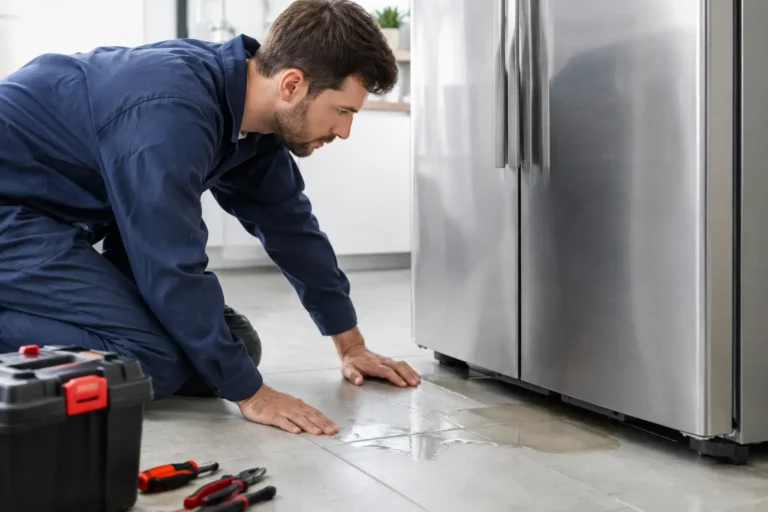
A dry kitchen floor at breakfast can become a spreading puddle by dinner. So, can a dishwasher leak suddenly? Yes – and while the water may appear without warning, the underlying fault often began earlier. A worn seal, loose hose or blocked filter can hold together for weeks before one busy cycle exposes the problem.
Treat any dishwasher leak as urgent. Water can damage flooring, kitchen units and electrical connections quickly, particularly if it travels beneath the appliance where it cannot be seen. The right first steps limit the damage. A proper diagnosis then prevents the same fault returning on the next wash.
Can a Dishwasher Leak Suddenly During a Cycle?
It can. Dishwashers fill, heat, spray, drain and refill under pressure. A component that is only slightly compromised may cope with a shorter eco wash but fail when a hotter, longer programme runs or when the machine drains at full speed.
The location and timing of the leak offer useful clues. Water appearing at the front during washing often points to the door seal, spray arms or detergent issue. Water at the back may come from the inlet or drain hose. A puddle underneath after the cycle has finished can indicate a pump, sump or internal hose problem.
Do not assume a small amount of water is harmless because the dishwasher still cleans dishes. A minor leak can become a significant one without notice, and repeated dampness can swell cabinet panels, damage laminate flooring and create mould in concealed areas.
What to Do as Soon as You See Water
Stop the programme using the controls, then switch the dishwasher off at the mains if you can do so without stepping in water. Shut off the appliance water supply, usually at the isolation valve beneath the kitchen sink. If water is close to a socket, extension lead or exposed wiring, do not touch electrical equipment. Isolate power at the consumer unit if necessary.
Use towels to contain the water and remove items stored in the cupboard next to the dishwasher. Avoid pulling out a built-in machine straight away. Its hoses and electrical cable may be under strain, and moving it can worsen a split connection or scratch the floor.
Before arranging a repair, make a note of when the leak occurred: during filling, while washing, when draining or after the dishwasher was switched off. Also note whether the water was clean, soapy or dirty. This information helps an engineer narrow down the cause more efficiently.
The Most Common Reasons a Dishwasher Starts Leaking
A damaged or dirty door seal
The rubber gasket around the door keeps wash water inside the tub. Grease, food debris and detergent residue can stop it sealing properly. With age, the rubber can flatten, crack or pull away at a corner.
Inspect the seal with the appliance switched off and cool. Wipe it with a soft damp cloth and look for obvious splits or sections that no longer sit evenly. Cleaning may solve a minor residue issue, but a torn or hardened seal needs replacement. Do not use petroleum-based products, which can degrade rubber components.
Spray arm damage or incorrect loading
A split spray arm, blocked jet or arm that is catching on a large plate can direct water towards the door rather than around the tub. This is one reason a dishwasher may leak on one particular programme or only when it is heavily loaded.
Check that both spray arms rotate freely and that tall baking trays, pans or utensil handles are not obstructing them. If an arm has a crack along its seam, replacing it is normally more reliable than trying to seal it.
Too much detergent or the wrong detergent
Excessive foam can force water past the door seal. This commonly happens when washing-up liquid is mistakenly used in the dishwasher, but it can also occur when too much powder is added or detergent is unsuitable for the local water hardness.
If there is a large amount of foam, stop the cycle and follow the appliance manufacturer’s instructions for clearing it. Do not keep running cycles in the hope that the foam will disappear. Repeated overflowing can allow water into areas not designed to get wet.
A loose, split or poorly positioned hose
The inlet hose supplies water under pressure, while the drain hose removes dirty water. Either can loosen over time through vibration, become brittle with age or be damaged when the dishwasher is moved. A drain hose that has slipped from its waste connection may leak only at the end of the cycle, which can make the fault seem random.
Accessible connections beneath the sink can sometimes be checked visually for drips. However, a hose connection behind an integrated dishwasher is harder to assess safely. The machine may need to be pulled forward with care, and the source is not always where the water emerges.
A blocked filter or drainage fault
Food particles, broken glass and labels can block the filter or restrict the drain path. The dishwasher may then struggle to remove water, causing it to back up or overflow. Dirty water left in the base after a programme, gurgling from the sink waste and leaks during draining are common signs.
Clean the user-removable filter according to the manual and remove visible debris carefully. If the filter is clear but the dishwasher still does not drain, the fault may involve the pump, drain hose or internal plumbing. Continued use risks flooding and can place strain on the pump.
A faulty pump, sump or internal component
Not every leak is visible from the outside. The circulation pump, drain pump, sump assembly and internal water channels all use seals and connections that can wear over time. A dishwasher may show no external sign until enough water escapes into the base.
Many machines have a safety tray and anti-flood system. When water collects there, the dishwasher may stop mid-cycle, display an error code or run its drain pump continuously. Turning the appliance off and on might quieten it temporarily, but it does not fix the source of the water. An internal leak should be inspected before the dishwasher is used again.
When a Dishwasher Leak Is Not Actually the Dishwasher
Condensation, a leaking sink trap or water from the worktop can collect around the dishwasher and make it appear responsible. Check the sink cupboard, tap connections and waste pipe, particularly if the dishwasher has not run recently.
There is also a difference between a leak and normal moisture. Opening the door immediately after a hot cycle releases steam, and a small amount of water can drip from dishes or the door edge. That is not the same as a persistent puddle on the floor, water beneath the appliance or wet cabinetry.
Should You Repair or Replace a Leaking Dishwasher?
The decision depends on the appliance’s age, condition and the part at fault. A door seal, hose, spray arm or drain pump can often make repair the sensible option, especially on a quality dishwasher that otherwise performs well. A more serious tub crack, extensive corrosion or repeated major faults on an older machine can change the calculation.
Avoid approving a repair based on guesswork. The same symptom can have very different causes, and replacing a visible part may not resolve an internal leak. A professional diagnosis should identify the failed component, check for secondary water damage and provide a clear fixed-price quote before work begins.
For households in West London facing an active leak, CrownTech Appliances provides in-home dishwasher diagnosis and repair, with certified engineers, clear pricing and a 12-month written parts and labour warranty. Same-day support can be particularly valuable when a dishwasher is integrated into fitted units or water has reached the kitchen floor.
A dishwasher leak is disruptive, but acting early protects far more than the appliance. Keep it isolated, avoid another test cycle and arrange an inspection before a manageable repair becomes damage to your kitchen.