A dinner that will not cook properly, an oven that trips the electrics or a display that has gone blank can disrupt the whole household quickly. The need to test an electric oven usually starts with one of these faults. A few careful checks can narrow down what is wrong, but safety comes first: electric ovens combine high heat, mains electricity and components that should never be handled while live.
This practical guide explains what you can check safely from the outside, what the results may mean, and when an engineer should take over. It is designed to help you make a clear repair decision, not to encourage risky DIY work.
Test an electric oven safely before anything else
Start by making the appliance safe. If there is smoke, burning smell, sparking, visible damage to the cable, or the cooker keeps tripping the circuit breaker, switch the oven off at the cooker control switch and isolate the circuit at the consumer unit if necessary. Do not use it again until it has been inspected.
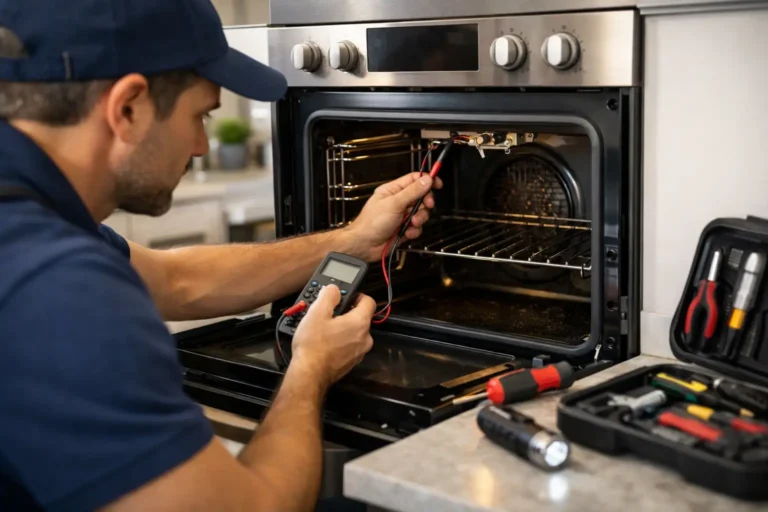
For routine checks, allow the oven to cool completely. Avoid removing rear panels, touching wiring or attempting continuity tests on elements unless you are qualified to work on fixed electrical appliances. An oven can appear switched off at its controls while parts of it remain connected to the mains supply.
Check the cooker control switch is on and look for a tripped breaker or RCD at the consumer unit. Reset a tripped breaker only once, after the oven has cooled. If it trips again when the oven is turned on or begins heating, stop there. Repeated tripping commonly points to an electrical fault such as a failing heating element, damaged wiring or moisture affecting a component.
Check whether the oven has power
A completely dead oven does not automatically mean the oven itself has failed. Look first at the display, clock and internal light. If the display is blank but other kitchen appliances are working, check whether the cooker switch has been accidentally turned off. On some models, a flashing clock after a power cut also prevents the oven from heating until the time has been set.
If the display works but neither oven function, fan nor light responds, the issue may involve the control board, selector switch or thermal safety device. These parts require professional diagnosis. Do not assume a replacement control panel will solve it: the underlying fault can be elsewhere.
Where only the oven light has failed, fit the correct heat-resistant bulb only after isolating power and confirming the existing bulb is cool. A blown bulb is a minor fault, but a light that repeatedly fails can indicate excess heat or an electrical issue worth investigating.
Test whether it heats on each function
Set the oven to a conventional heat setting, usually top and bottom heat, and select 180C. Leave the door closed for around 10 to 15 minutes. You should feel heat when you carefully open the door afterwards, but do not put your hand close to the elements or touch internal surfaces.
Next, turn the oven off, let it cool, then repeat the check using the fan oven setting if your appliance has one. The fan should normally begin running shortly after the programme starts, although its operation can vary by model and setting. A fan that is noisy, slow, intermittent or completely still may have a faulty motor, fan blade obstruction or control fault.
The pattern matters. If the oven heats on one setting but not another, it is often linked to the element used by that function. For example, a fan oven that blows air but remains cold may have a failed circular fan element. An oven that heats from below but never browns food may have a problem with the grill or upper element. These are common repairable faults, but element testing and replacement should be carried out with the appliance isolated by a competent engineer.
Look for visible signs without dismantling
With the oven cold and switched off, inspect the accessible elements inside the cavity. A break, blister, scorch mark or section that looks warped can suggest an element has failed. Not every failed element shows visible damage, so an unmarked element cannot be ruled out by sight alone.
Also check for loose shelves or trays touching the fan cover, damaged door seals and food debris around the door. These may not cause a total failure, but they can affect cooking results and make the oven appear less efficient than it is.
Check temperature accuracy with an oven thermometer
An oven that heats but burns food, leaves the centre undercooked or takes far too long may be running at the wrong temperature. The most useful non-invasive test is an oven thermometer placed in the centre of the middle shelf, not against a wall or directly beside an element.
Set the oven to 180C and allow it to preheat fully. Once the indicator light goes out, leave it for a further 15 minutes, then check the thermometer through the door where possible. Temperatures naturally rise and fall as the thermostat cycles, so take several readings over 20 to 30 minutes rather than relying on one number.
A small difference between the selected temperature and the thermometer reading is normal. A persistent gap of roughly 15C or more, however, especially if cooking results confirm the issue, can indicate a faulty thermostat, temperature sensor, control board or relay. The cause depends on the make and model, which is why diagnosis is more reliable than replacing a part by guesswork.
Do not try to calibrate the oven by adjusting internal screws or removing its control panel. Modern electronic ovens may use sensors and programmed controls rather than a simple adjustable thermostat.
Check the door, seal and cooking performance
Heat escaping through a damaged door seal can cause uneven cooking, longer cooking times and excessive heat around the front of the appliance. With the oven cold, inspect the rubber seal for tears, flattened sections, hardened areas or places where it has come away from the frame. A seal may be replaceable, but it needs to be the correct part for the model.
Close the door and check that it sits evenly without needing to be lifted or forced. A loose hinge, worn catch or misaligned door can prevent it sealing correctly. Do not continue using an oven with a cracked inner or outer glass panel. Oven door glass is designed to manage high temperatures and should be replaced correctly.
If the door is sound but food cooks unevenly, try one simple comparison: place identical slices of bread on a tray across the middle shelf and use the normal cooking setting for a short period. Uneven browning may point to poor heat distribution, a weak element or a fan issue. Keep the test brief and supervise it throughout.
Know when to stop testing and book a repair
Some faults are clear warning signs that an oven needs professional attention straight away. These include electrical tripping, burning smells, sparks, exposed wiring, a cracked glass door, a fan that makes grinding noises, or an oven that overheats well beyond its selected setting.
It is also time to book an engineer when basic checks show that the appliance has power but will not heat, only one function works, or the temperature remains consistently inaccurate. These problems are often repairable, particularly where the oven is otherwise in good condition. Replacing an element, thermostat, fan motor or door seal can be considerably more sensible than replacing a built-in appliance and arranging new installation.
When arranging a visit, have the make, model number and a clear description of the fault ready. Note whether the oven trips the electrics, which functions work, whether the fan runs, and what happened during the temperature check. This helps an engineer arrive prepared and reduces the chance of unnecessary delays.
For households in West London dealing with an urgent oven fault, CrownTech Appliances provides in-home diagnosis with clear fixed-price quotes, no-fix-no-fee protection and a 12-month written parts and labour warranty. The right repair should leave you confident about both the fault and the cost before work begins.
A safe test can tell you a great deal, but it should never mean taking risks with a mains-powered appliance. If the results point to an internal electrical or heating fault, switch the oven off, keep the notes from your checks, and let a qualified engineer restore it properly.