A cold oven on a busy weekday is frustrating. An oven that trips the electrics, smells of burning or heats unpredictably is a different matter altogether. Oven faults can range from a simple setting issue to a failed component that needs prompt, professional attention – and recognising the difference can protect your household, your appliance and your budget.
Start with safety, not guesswork
Before investigating an oven problem, switch the appliance off and allow it to cool fully. If there is smoke, sparking, a burning-plastic smell, visible damage to the cable, or the consumer unit has tripped, isolate the oven at the cooker switch if it is safe to do so. Do not keep resetting the circuit to see whether it will hold.
Modern electric ovens contain high-voltage components, heating elements, cooling fans and electronic control boards. Removing panels or attempting electrical repairs without the correct training can create a shock or fire risk. A qualified appliance engineer can test the appliance safely and identify the failed part without replacing components on a trial-and-error basis.
There are a few sensible checks a homeowner can make. Confirm that the clock has not reset or entered automatic cooking mode, check whether the door is properly closed, and make sure the oven has not simply been switched off at the wall. If the fault remains, a proper diagnosis is the next step.
The most common oven faults and what they indicate
The oven is not heating up
An oven that appears to switch on but remains cold often has a failed heating element, thermostat, temperature sensor or control board. On fan ovens, the circular element at the rear is a frequent cause. You may notice that the fan still runs and the interior light works, but food does not cook.
If one function works but another does not, that detail matters. For example, a grill that heats normally while fan cooking stays cold can point towards the fan element rather than a supply issue. Tell the engineer exactly which settings work, as this can speed up diagnosis.
The oven heats, but food takes far too long
Uneven or weak heating is one of the most disruptive faults because it can be easy to dismiss at first. You may find that cakes sink, roasts need much longer than usual, or food is cooked on one side but not the other. This can be caused by an element losing efficiency, a faulty thermostat or sensor, poor fan circulation, or an oven door that no longer seals correctly.
An oven thermometer can provide a useful indication, but it does not replace a diagnostic test. Domestic ovens naturally cycle above and below their set temperature. The concern is a consistent, significant difference between the selected setting and the actual cooking temperature.
The oven keeps tripping the electrics
An oven that trips the RCD or circuit breaker should not be ignored. The cause is often an electrical leakage fault from a heating element, particularly when moisture or age has damaged its insulation. A faulty fan motor, wiring connection or control board can also be responsible.
The trip may happen as soon as the oven is switched on, only after it has warmed up, or when a specific setting is selected. Each pattern gives useful diagnostic information. Avoid using extension leads or repeatedly resetting the consumer unit. Isolate the appliance and arrange a professional inspection.
The fan is noisy or not running
A fan oven relies on airflow to distribute heat evenly. If the fan is rattling, scraping, humming without turning or completely silent, the motor, fan blade or related wiring may need attention. A failed fan can lead to poor cooking results and, in some models, overheating.
Do not assume the fan should always operate immediately. Some ovens use a cooling fan that runs after cooking, while the internal circulation fan may behave differently depending on the selected programme. The operating manual can clarify normal behaviour, but unusual noise or uneven cooking warrants a repair visit.
The oven door will not close or seal
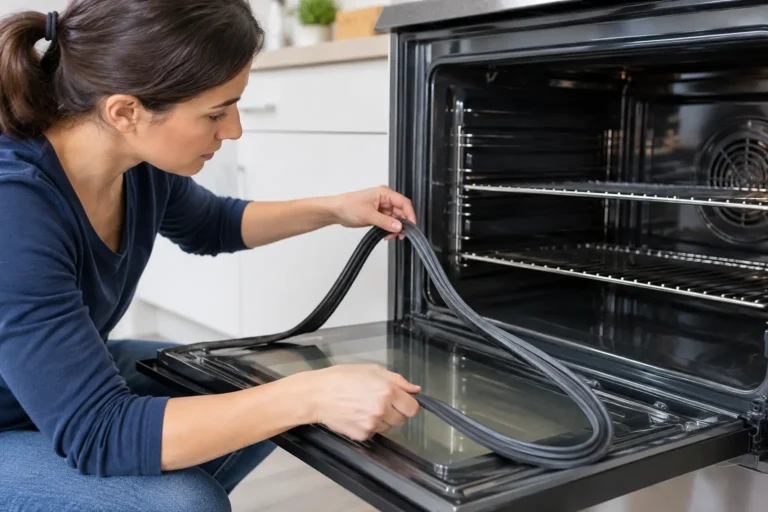
A door that hangs open, needs force to close or lets heat escape can be more than an inconvenience. Worn hinges, a damaged seal or broken door catch may cause heat loss, longer cooking times and excess strain on other components. The outer glass can also become hotter than expected.
Do not continue using an oven with cracked door glass. Switch it off and arrange repair. Glass panels are designed to withstand heat, but damage can worsen rapidly and creates a safety risk.
Error codes, flashing displays and dead controls
Electronic displays can show an error code, flash unexpectedly or stop responding altogether. Sometimes the cause is as simple as a power interruption that has reset the clock. In other cases, it indicates a problem with the touch controls, wiring, temperature sensor or main control module.
Make a note of the code and the model number before booking a repair. Do not rely on an online code list alone: manufacturers can use similar codes differently across model ranges, and the displayed error may describe a symptom rather than the failed component.
When repair is usually the sensible choice
Many oven faults are repairable, even when the appliance has stopped working completely. Heating elements, thermostats, sensors, fans, hinges, seals and switches are commonly replaced parts. If the oven is otherwise in good condition, repair is often more cost-effective and less disruptive than buying a new appliance, arranging delivery and altering kitchen cabinetry to suit a replacement.
The decision depends on the age, make, condition and nature of the fault. A relatively recent Bosch, Neff, Siemens, Miele, Samsung or LG oven with a clear component failure is often worth repairing. Conversely, if an older appliance has repeated faults, significant corrosion, unavailable parts or a failed main control board with a high repair cost, replacement may be the more practical option.
A transparent diagnosis should make that decision easier. You should know what has failed, what repair involves, the quoted cost and whether parts and labour are guaranteed before authorising work.
Information that helps an engineer diagnose faster
A repair appointment is more efficient when the engineer has a clear picture of the problem. Have the appliance brand, model number and, where available, the product or service number ready. These details are commonly found around the door frame, on the side panel or in the instruction manual.
It also helps to describe what happened immediately before the fault. Did the oven trip during preheating? Has it gradually become less hot over several weeks? Does the problem affect fan cooking, conventional heat, grill mode or every setting? A short video of a noise or error message can be useful, provided it is safe to take.
For busy households, the value of professional repair is not only the replacement part. It is the certainty that the electrical fault has been tested properly, the appliance has been checked after repair and the work is covered by a written warranty. CrownTech Appliances provides fixed-price quotes, no-fix-no-fee support and a 12-month written parts and labour warranty, so customers can make a clear decision rather than gamble on an uncertain repair.
Preventing avoidable oven problems
Not every fault can be prevented, as heating elements and electronics wear over time. Good habits can still reduce unnecessary strain. Keep the door seal clean, avoid slamming the door, remove heavy spills before they carbonise, and do not line the oven base or cover vents with foil unless the manufacturer specifically permits it. Restricted airflow can cause overheating and damage internal components.
Use self-cleaning functions carefully. Pyrolytic cycles reach extremely high temperatures and can expose weaknesses in older elements, fans and control components. That does not mean the function is unsafe when used as instructed, but if an oven already has intermittent faults, unusual noises or a damaged seal, arrange an inspection before running a high-heat cleaning cycle.
When an oven becomes unreliable, acting early is usually less inconvenient than waiting for complete failure. Switch it off if there are any signs of electrical danger, keep the model details to hand, and choose a repair service that explains the fault and the cost before work begins.