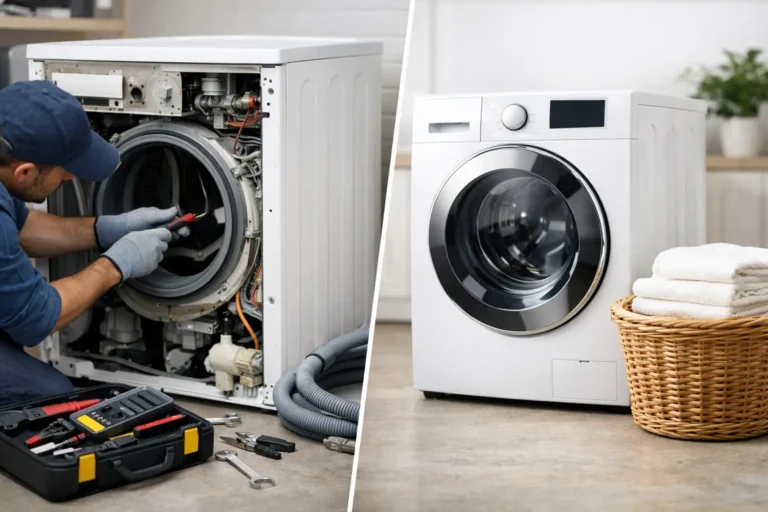
A washing machine that suddenly sounds different deserves attention. Washing machine drum noise is often caused by something straightforward, such as an unbalanced load or an item caught in the drum, but a heavy rumble, grinding sound or repeated knocking can point to a part that needs repair. The key is knowing which noises can wait until the next wash and which ones mean you should stop the machine.
What type of washing machine drum noise are you hearing?
The sound, and when it happens, gives a useful first clue. A noise during the wash phase may have a different cause from one that starts only when the machine reaches high-speed spin.
A light tapping or clicking is commonly caused by coins, bra wires, buttons or small objects moving inside the drum. Check pockets before every wash, but do not assume an item is harmless simply because the machine still runs. A loose metal object can work its way through the drum holes and damage the heater, pump or outer tub.
A loud thumping during spin is more often linked to an uneven load. One heavy item, such as a bath mat, duvet cover or trainers, can pull the drum off balance. The machine may shake, move across the floor or repeatedly slow down as it tries to redistribute the load.
A low rumble that becomes louder and faster as the drum spins is a classic warning sign of worn drum bearings. This is usually more noticeable during the spin cycle and may be accompanied by play in the drum. Bearing faults do not improve with use. Continuing to run the appliance can cause further damage to the drum shaft, seal and tub.
Grinding, scraping or metallic rubbing needs prompt investigation. It can indicate an object trapped between the inner and outer drums, a damaged bearing, or in some cases a worn motor component. If the sound is severe, stop the cycle and switch the appliance off at the mains rather than attempting another spin.
Simple checks you can make safely
Before arranging a repair, there are a few checks that are sensible to carry out. They can rule out loading and installation issues without dismantling the machine.
First, switch the appliance off and empty it. With the door open, slowly turn the drum by hand. It should rotate smoothly with only a gentle, consistent sound. A scrape, clunk, rough spot or rattling noise suggests there may be an obstruction or mechanical fault.
Next, gently lift the stainless-steel drum at the top edge. A small amount of movement can be normal, but obvious up-and-down movement, especially with a clunk, can indicate worn bearings or a damaged drum support. Do not force it. The purpose is only to identify excessive play.
Then check the machine is stable. All four feet should sit firmly on a solid, level floor. A washing machine on uneven tiles, flexible flooring or an unsteady plinth can become very noisy during spin even when nothing is wrong internally. Adjusting the feet may help, although this will not cure a grinding or rumbling drum.
Finally, inspect the rubber door seal for visible objects. A hair grip, screw or bra wire may be lodged around the edge. Use a torch and remove only items that are clearly accessible. Avoid poking tools through drum holes or pulling hard at anything that appears trapped.
When an uneven load is the likely cause
Not every noisy spin means a repair is needed. Modern washing machines use sensors to manage imbalance, but they cannot always compensate for a single heavy item or a very small load. A machine may bang against its cabinet, pause several times before spinning, or stop with laundry still wet.
Try redistributing the items and adding a couple of similarly weighted towels where appropriate. Wash large items such as duvets and blankets according to the care label and the machine’s stated capacity. Overloading is just as problematic as underloading because it puts strain on the drum suspension and prevents clothes from moving freely.
If the noise disappears after rebalancing the load, monitor the next few washes. If the machine continues to bang with normal mixed loads, the shock absorbers, suspension springs or counterweights may need inspection.
Common faults behind persistent drum noise
Worn drum bearings
Bearings support the drum as it spins. They are protected by a seal, but when that seal fails, water can enter and cause corrosion. The early signs are a distant rumble during spin and increasing looseness in the drum. Left unresolved, a bearing fault can become much louder and turn a repairable issue into a more extensive one.
Bearing replacement is not a quick DIY job on most modern machines. Access can require substantial strip-down, and some appliances have sealed tubs that affect repair options and cost. An engineer should assess the model, the condition of the shaft and the overall age of the machine before advising whether repair is worthwhile.
Foreign objects between the drums
Small objects can escape through the perforations in the inner drum and become trapped beneath it. Bra wires are particularly common, but screws, coins and small pieces of plastic can also cause trouble. The result may be a regular scrape at one point in every rotation or a metallic rattle when the drum moves.
Removing an obstruction may involve accessing the heater aperture, sump hose or other internal components. It is best left to a qualified engineer, particularly where electrical connections and water seals are involved.
Worn shock absorbers or suspension
The drum is designed to move, but it should not strike the cabinet or bounce excessively. Worn dampers and springs can produce banging or knocking on spin, especially with heavier loads. These parts are under tension and their condition should be checked properly rather than guessed at.
Loose counterweight or drum component
Concrete counterweights help keep the machine stable at high speed. If a mounting bolt loosens, the machine can make a deep knock that is easy to mistake for an unbalanced load. A loose internal component should be dealt with quickly because repeated vibration can damage the tub, wiring or cabinet.
Do not keep running a machine that is grinding or moving
It is tempting to finish a wash when the appliance is full of laundry, particularly in a busy household. However, a machine that is grinding, violently shaking, smelling hot, leaking or making a harsh metal-on-metal sound should be stopped. Turn it off at the mains, close the water supply if there is a leak, and do not pull the machine out by its hoses or cable.
Repeated use can increase the final cost. A worn bearing may damage the shaft, while a trapped object can perforate a hose or interfere with the heating element. A machine that walks across the floor can also strain its water connections and cause a leak.
Is repair worth it for drum noise?
The answer depends on the fault, make, age and condition of the appliance. Removing a trapped object, replacing shock absorbers or correcting an installation problem can be an economical repair. Bearing work is more variable because the labour involved and tub design differ significantly between models.
A professional diagnosis should identify the source of the sound before any work is approved. Ask for a clear explanation of the fault, the parts required and the total price. A proper repair should also include a written warranty on parts and labour, so you are not left paying twice for the same problem.
For households in West London, CrownTech Appliances provides in-home washing machine diagnosis and repair with fixed-price quotes, DBS-checked engineers and a 12-month written parts and labour warranty. If the machine is beyond sensible repair, an honest assessment can prevent money being spent on a short-term fix.
Preventing future drum noise
Most avoidable drum problems begin with small items left in pockets or unsuitable loads. Check pockets, fasten zips, use a mesh bag for delicate items with wires, and avoid washing trainers or very heavy articles unless the manufacturer permits it. Keep the machine level and avoid routinely overfilling it.
A new sound is your machine asking for attention. Deal with a persistent rumble, scrape or heavy knock early, and you are far more likely to protect both the appliance and your laundry routine.