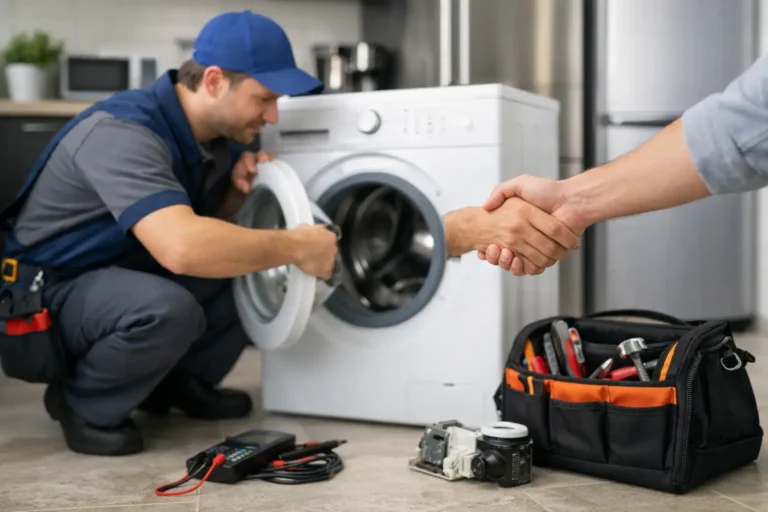
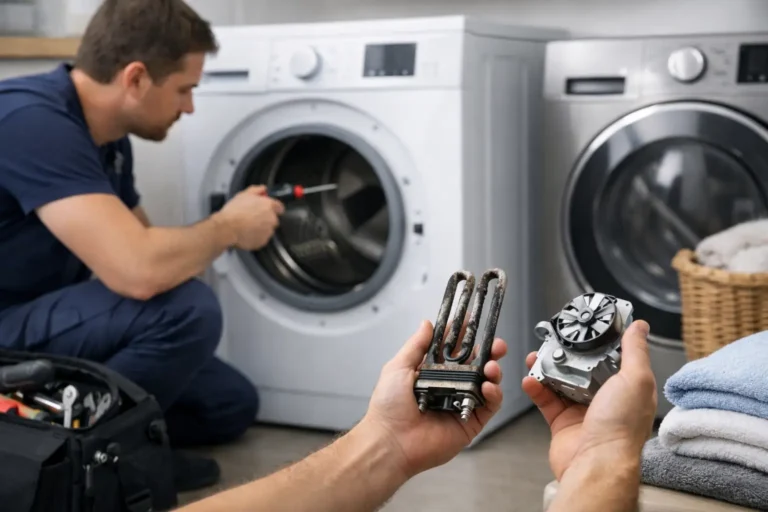
A washing machine that stops mid-cycle or a fridge freezer that will not hold temperature creates an immediate problem: do you pay to fix it, or start shopping for a replacement? The repair versus replacement appliance decision is rarely as simple as choosing the cheaper figure on the day. Age, fault type, parts availability, energy use and safety all affect what represents real value.
For busy households, landlords and tenants, a professional diagnosis is often the fastest way to remove the guesswork. A fault code, a leak or a strange noise can sound terminal, yet many are caused by a replaceable pump, heater, seal, fan motor or control component. Equally, some repairs are not sensible when an appliance is near the end of its working life or has suffered major damage.
Appliance Repair Versus Replacement: Start With the Fault
Do not decide based on symptoms alone. For example, a dishwasher that leaves dishes dirty may need a simple circulation repair, but it could also have a failing control board. A tumble dryer that is not heating may have a thermostat or heater fault, while a noisy drum may point to worn bearings. The difference matters because the labour, parts cost and long-term reliability can be very different.
A proper diagnosis identifies the failed component, checks for related wear and confirms whether genuine parts are available. It should also give you a clear fixed-price quote before work begins. This is especially valuable for premium brands such as Miele, Bosch, Siemens, Neff, Samsung and LG, where an accurate repair can protect an appliance that still has years of useful service ahead.
Avoid replacing an appliance solely because it has developed one fault. A single failed part is not the same as an appliance that is generally worn out. On the other hand, if several components are deteriorating, the door seal is damaged, the cabinet is corroded or the machine has already needed repeated repairs, replacement may be the more dependable choice.
Consider the Appliance’s Age and Expected Lifespan
Age is a useful guide, not a rule. Build quality, usage levels and maintenance all matter. A washing machine used daily by a large family will naturally wear faster than one used twice a week in a one-person flat.
As a broad guide, washing machines, dishwashers and tumble dryers commonly provide around 10 to 15 years of service. Fridge freezers often last 10 to 20 years, although compressor condition, ventilation and the quality of the cooling system make a major difference. Electric ovens and hobs can last longer because they have fewer moving parts, but electronics and induction modules can still be costly when they fail.
If an appliance is less than halfway through a reasonable expected lifespan, repair is often worth investigating. A well-maintained six-year-old dishwasher with a failed drain pump is a very different proposition from a 14-year-old dishwasher with a leaking sump, worn baskets and intermittent electronic faults.
For newer appliances, check whether the manufacturer warranty, retailer protection or home insurance may cover the issue. Do not arrange an unauthorised repair first if doing so could affect valid cover.
The 50% Rule Is Useful, But Not Absolute
You may hear that replacement is best when a repair costs more than 50% of a new appliance. It is a helpful starting point, but it can be misleading.
A basic replacement may be cheap to buy but have a smaller capacity, fewer features and a shorter expected life than the model you own. Installation, delivery, recycling and any plumbing or electrical alterations can also add to the true cost. For integrated appliances, replacing the unit may involve fitting issues or adjustments to kitchen cabinetry.
By contrast, spending more than half the cost of a basic new machine to repair a high-quality model can still be sensible. The right comparison is not simply repair cost against the lowest-priced replacement. Compare it with a suitable new appliance that meets your household’s needs, including installation and disposal costs.
When Repair Usually Makes Financial Sense
Repair is commonly the stronger option when the appliance is relatively young, the fault is isolated and the machine has otherwise been reliable. Common worthwhile repairs include replacing pumps, heating elements, door locks, belts, seals, valves, thermostats, fans and selected sensors.
It can also make sense when a replacement would cause disruption. An integrated dishwasher, built-in oven or American-style fridge freezer is not always a straightforward swap. Measurements, ventilation clearances, access routes and fitting arrangements need to be considered before ordering a new model.
There is an environmental benefit too. Replacing one failed component usually creates far less waste than discarding an entire appliance. Extending the life of a sound machine reduces the materials, manufacturing and transport required for a replacement. That benefit should not override safety or reliability, but it is a meaningful advantage when the repair is viable.
When Replacement Is the Better Decision
Replacement is normally the safer choice where there is a serious safety issue, extensive corrosion, a damaged drum or tub, a failed sealed system in an older fridge freezer, or multiple expensive faults occurring close together. An engineer should be clear if a repair would be temporary, uneconomical or unlikely to provide dependable service.
Energy performance can also change the calculation, particularly for refrigeration. An older fridge freezer that runs constantly, struggles to cool or has a compressor-related fault may cost more to operate and repair than it is worth. A modern replacement may reduce electricity use, although the saving should be viewed realistically rather than used to justify replacing a functioning appliance prematurely.
Parts availability is another practical limit. Manufacturers eventually stop supplying components, especially for older electronics and model-specific parts. If a key part is unavailable, used or non-genuine alternatives may not offer the reliability or warranty protection you need.
Never Ignore Electrical or Cooling Risks
Stop using an appliance and seek professional advice if you notice burning smells, scorching, repeated tripping of the electrics, exposed wiring, a significant water leak near electrical components, or a fridge freezer that cannot maintain a safe temperature. Do not repeatedly reset a tripping appliance or attempt internal electrical repairs yourself.
Cooling appliances require particular care. Refrigerant work must be handled by an appropriately qualified engineer. If a fridge freezer has lost cooling performance, has an oily residue around pipework or appears to have a sealed-system fault, diagnosis should come before any decision to repair or replace.
Factor in Reliability, Not Just Today’s Bill
The cheapest decision today can become expensive if the appliance fails again in a few months. Ask whether the proposed repair addresses the root cause, whether related components show wear, and what warranty applies to parts and labour.
A written warranty provides useful reassurance because it shows the repairer stands behind the work. CrownTech Appliances provides a 12-month written parts and labour warranty on repairs, alongside fixed-price quotes and a no-fix-no-fee approach. That makes it easier to assess a repair on its real merits rather than taking a chance on an unclear call-out cost.
For landlords and property managers, reliability is particularly valuable. A cheap replacement that is difficult to install or a rushed repair with no guarantee can create further tenant disruption. For households, the same principle applies: a dependable repair completed promptly may be worth more than days spent without laundry, refrigeration or cooking facilities.
Questions to Ask Before You Decide
Before authorising work or ordering a replacement, establish the appliance’s exact age and model, the confirmed cause of the fault, the full repair price and the warranty offered. Ask whether there are signs of further wear, whether genuine parts will be used and whether the repair is expected to restore normal reliable operation.
If replacement is recommended, compare like for like. Check dimensions, capacity, energy rating, installation requirements and the cost of removing the old appliance. This is particularly important for built-in ovens, integrated dishwashers and large fridge freezers, where an apparently inexpensive purchase can create fitting complications.
A clear diagnosis turns a stressful breakdown into a practical decision. If the machine has a repairable fault and plenty of useful life left, repairing it is often the fastest and most cost-effective route back to normal. If it has become unsafe, inefficient or repeatedly unreliable, replacing it can prevent another disruption just around the corner.