A warm fridge freezer is rarely a fault you can leave until the weekend. Milk turns quickly, frozen food starts to soften, and what looks like a small issue can become a full food-loss problem within hours. If you are searching for fridge freezer not cooling repair, the priority is simple: protect your food, avoid making the fault worse, and work out whether the problem is something basic or something that needs a qualified engineer.
The good news is that not every cooling issue means the appliance is beyond repair. In many cases, the cause is straightforward – poor airflow, a door seal problem, iced-over vents, dirty condenser coils or a failed fan. In other cases, the fault sits deeper in the cooling system, control board or compressor circuit, and that is where a proper diagnosis matters.
What to check before booking a fridge freezer not cooling repair
Start with the obvious, because simple faults are more common than most people think. First, check the temperature settings. It is not unusual for a control dial or digital panel to be knocked accidentally, especially in busy family kitchens or rented properties. A fridge section should generally sit around 3 to 5 degrees Celsius, while the freezer should be closer to minus 18.
Next, look at how full the appliance is and how air moves inside it. Overpacking shelves can block internal vents, which stops cold air circulating properly. If the freezer is working a little but the fridge is warm, blocked airflow is a likely cause. Likewise, pushing the appliance too tightly against the wall can reduce ventilation around the rear components.
Then check the door seals. If warm air is constantly entering through worn or split gaskets, the appliance may run for longer without ever reaching temperature. You may notice condensation, frost build-up or a compressor that seems to be working constantly. A quick visual inspection often tells you a lot.
Finally, listen. A healthy fridge freezer usually makes some operational noise – fan movement, compressor cycling, the occasional click. Silence when the appliance should be cooling, repeated clicking, or loud buzzing can all point to a component fault rather than a usage issue.
Common reasons a fridge freezer stops cooling
Frost build-up behind the panels
On frost-free models, ice can build around the evaporator if the defrost system fails. That usually means the fan cannot push cold air through the cabinet properly. The result is uneven temperatures – the freezer may seem partly cold while the fridge warms up, or both compartments may gradually stop cooling.
This is not a fault to guess your way through. The issue could be the defrost heater, thermostat, sensor or control board. Defrosting the appliance manually may give temporary relief, but if the underlying cause remains, the problem normally returns.
Faulty evaporator or condenser fan
Fans do the hard work of moving cold air where it needs to go. If an evaporator fan stops, cold air may never reach the fridge compartment properly. If a condenser fan fails, heat is not expelled as it should be, and the system can struggle or overheat.
A failed fan often gives warning signs – unusual whirring, grinding or no airflow at all. Some fans are accessible only after panels are removed, which is one reason accurate diagnosis matters.
Dirty condenser coils
If condenser coils are clogged with grease, dust or pet hair, the appliance cannot release heat efficiently. That can lead to poor cooling and higher running costs. This is more common in homes where the fridge freezer sits near cooking areas or where rear and lower sections are not cleaned regularly.
It is a simple issue in theory, but not every model gives safe or easy access. Built-in units can be awkward, and forcing panels off can create another repair bill.
Thermostat, sensor or control faults
Modern fridge freezers rely on sensors and electronic control boards to regulate temperature. If the appliance misreads the internal temperature, it may not cool correctly, may run constantly, or may stop cooling without any obvious external sign.
This is where many DIY attempts go wrong. A warm cabinet does not always mean the compressor is dead. It may mean the appliance is not being told to cool properly. Replacing parts without testing can become expensive very quickly.
Compressor or start relay failure
The compressor is the core of the cooling system. If it fails, or if the start relay cannot get it running, cooling performance can drop sharply or stop altogether. You may hear repeated clicking, brief humming followed by silence, or no meaningful cooling in either compartment.
Compressor-related faults need careful assessment, especially when the appliance is older. Sometimes repair is worthwhile. Sometimes replacement makes more financial sense. The right answer depends on age, brand, parts availability and the condition of the rest of the machine.
Refrigerant leak or sealed system issue
If refrigerant levels are low due to a leak, the fridge freezer may run but struggle to get cold. You might notice patchy cooling, weak frost patterns or a compressor that never seems to switch off. These faults require specialist handling and must be dealt with by an engineer qualified to work on cooling systems.
This is not a safe DIY repair. Sealed system work needs proper tools, pressure testing and F-Gas certification.
When a warm fridge freezer is an emergency
Not every breakdown is equally urgent, but some situations need same-day attention. If the freezer has started thawing, food safety becomes the main concern. If you store medication that needs refrigeration, urgency is obvious. The same applies if the appliance is making electrical burning smells, tripping power, or showing signs of overheating.
For landlords and property managers, response time matters for another reason. A failed fridge freezer in a tenanted property quickly becomes a live complaint, especially if food has been lost. Fast diagnosis reduces disruption and avoids the usual back-and-forth over who is attending and when.
Should you repair it or replace it?
That depends on the fault and the appliance itself. A relatively recent Bosch, Samsung, LG, Siemens, Miele or Neff model with a fan, thermostat, sensor or door seal issue is often well worth repairing. You keep a familiar appliance in service and avoid the cost and delay of sourcing a replacement.
The calculation changes with older machines, especially if the compressor has failed or the sealed system is compromised. In those cases, repair can still be possible, but the value depends on the age of the unit, the cost of parts and how reliable the appliance has been overall.
Clear advice matters here. A trustworthy engineer should not push a repair that does not make sense. You need a straight answer on fault, cost and likely outcome, not guesswork.
What a proper fridge freezer repair visit should look like
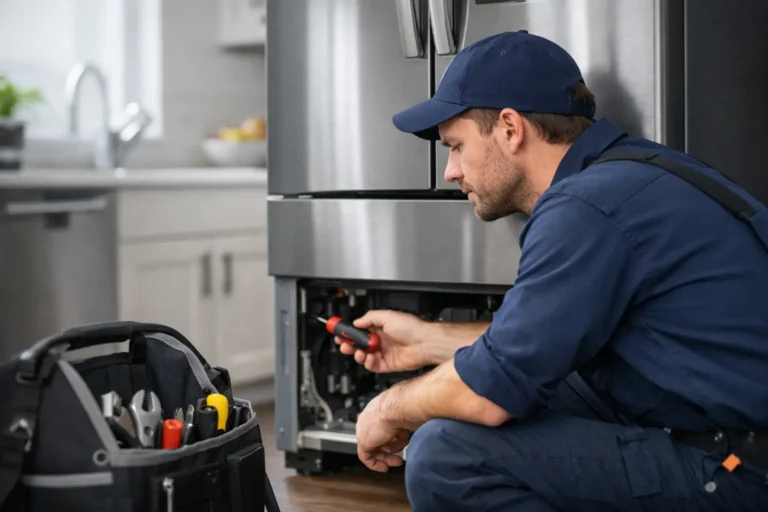
A professional repair should begin with diagnosis, not part-swapping. That means checking temperatures, airflow, fans, sensors, compressor behaviour, electrical supply and, where needed, the cooling circuit. The aim is to identify the actual failure point before any quote is given.
From there, the process should be transparent. You should know what has failed, whether repair is viable, what the fixed price is, and what warranty backs the work. For cooling appliances, qualifications matter as well. If the fault involves refrigerant or sealed system work, use an engineer with the right certification rather than a general handyman.
For busy households in West London, reliability is often as important as technical skill. A missed appointment can mean another day of food loss and disruption. That is why many customers choose a service built around fixed arrival windows, genuine parts and clear repair guarantees. CrownTech Appliances, for example, focuses on same-day diagnosis and repair with DBS-checked engineers, fixed-price quotes and a 12-month written parts and labour warranty, which removes a lot of the usual uncertainty.
Avoiding repeat cooling problems
Once repaired, a few habits help prevent the same issue returning. Keep vents clear inside the appliance, avoid overfilling shelves, clean accessible condenser areas, and do not ignore damaged door seals. If the appliance starts sounding different or running non-stop, act early. Small cooling faults are often cheaper to put right before they affect multiple components.
Built-in and American-style fridge freezers deserve particular attention because airflow and access are less forgiving. If one of these units starts warming up, delaying diagnosis usually makes the job harder rather than easier.
A fridge freezer does not need to stop completely to be failing. If food feels less cold, the motor is running constantly, or one compartment is no longer holding temperature, trust that early sign and get it checked before a minor fault turns into a spoiled shop and a larger repair.