When an American-style fridge freezer stops cooling properly, leaks onto the floor, or starts beeping for no clear reason, the disruption is immediate. Food is at risk, routines are thrown off, and American-style fridge freezer repair quickly becomes less of a nice-to-have and more of an urgent household decision.
These appliances are convenient when they work well, but they are more complex than standard fridge freezers. They often include twin cooling systems, fan motors, electronic control boards, ice makers, water valves and defrost components that all need to operate in sync. When one part fails, the symptoms can look bigger than the actual fault. That is why a proper diagnosis matters before anyone talks about replacement.
Why American-style fridge freezer repair needs specialist diagnosis
A large side-by-side or French-door appliance is not simply a bigger fridge. It usually has more sensors, more airflow management and more electrical components than a conventional model. Many models from Samsung, LG, Bosch and Siemens also include integrated dispensers, inverter compressors and digital displays, which means faults are not always obvious from the outside.
A unit that is warm inside might have a failed evaporator fan, a defrost heater problem, a blocked drain, a faulty temperature sensor or a control board issue. To a homeowner, all of those can look like the same problem – “the fridge is not cold”. To an experienced engineer, the route to repair depends on testing, not guessing.
This is where many repair visits go wrong. A general handyman may replace a visible part without confirming the root cause. That can waste time and money, especially on premium appliances where parts are not cheap. For cooling appliances, F-Gas certification and brand familiarity also matter if sealed-system work is involved.
The most common American-style fridge freezer faults
Cooling issues are the most frequent reason people call. Sometimes the freezer still works while the fridge section turns warm. In other cases, both compartments struggle. Uneven temperatures often point to an airflow or defrost problem rather than total appliance failure.
Excessive frost build-up is another common issue. If ice forms around the back panel or inside the freezer drawers, the defrost system may not be clearing condensation properly. Left alone, this can choke airflow and make the fridge side warm even though the freezer appears active.
Water leaks are also common, particularly around dispenser models. A blocked defrost drain, split water line, faulty inlet valve or poor door seal can all be responsible. The visible puddle is only the symptom. The real fault can sit behind panels or beneath the appliance.
Then there are ice maker and water dispenser faults. These are rarely just “an ice maker problem”. The cause could be low water pressure, a frozen fill tube, a failed valve, a sensor issue, a worn motor or a control fault. On some models, even a door switch issue can affect dispenser operation.
Noisy operation is worth taking seriously too. A humming compressor is normal. Clicking, grinding, rattling or repeated start-stop behaviour is not. Fan motors, compressors, relays and loose internal panels all create different sounds, and the pattern usually tells an engineer where to look first.
When to call for American-style fridge freezer repair
There is a difference between a minor user issue and a genuine breakdown. If the temperature has been unstable for more than a few hours, food is softening in the freezer, the fridge is warm despite correct settings, or the appliance keeps tripping the electrics, it is time to stop troubleshooting and book a repair.
The same applies if you notice burning smells, persistent alarm sounds, heavy frost build-up, water pooling underneath, or an ice maker that has stopped working after a filter change and reset. Some problems can worsen quickly. A fan motor struggling behind an ice-covered panel may still run for a while, but not for long.
Busy households usually benefit from acting early. A delayed repair can turn a relatively straightforward part replacement into spoiled food, damaged flooring or a larger electrical fault. For landlords and property managers, quick action also helps avoid tenant complaints and preventable call-backs.
Repair or replace – what actually makes sense?
This is the question most people ask after the first sign of trouble, and the honest answer is that it depends on age, brand, fault type and condition. A premium American-style fridge freezer that is otherwise in good order is often well worth repairing, particularly if the fault involves a fan motor, thermostat, heater, valve, sensor or door seal.
Replacement becomes more likely when the appliance is very old, has repeated major faults, or needs expensive sealed-system work on a lower-value model. Cosmetic wear matters less than mechanical condition. A scratched door does not make a fridge uneconomical to repair, but compressor failure on an ageing budget unit might.
The cost comparison should be realistic. Replacing an American-style appliance is not just about the purchase price. There may be delivery delays, disposal charges, plumbing reconnection, cabinetry fit concerns and the inconvenience of living without refrigeration. A clear fixed-price quote helps customers compare properly rather than making a rushed decision under pressure.
What happens during a proper repair visit
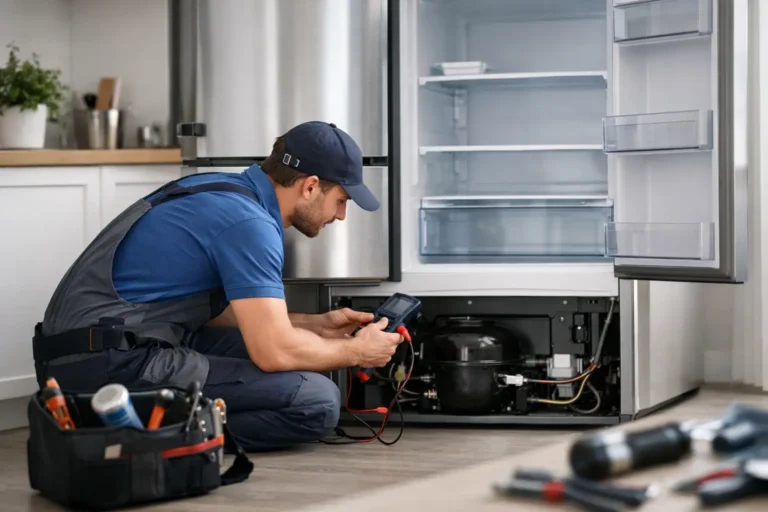
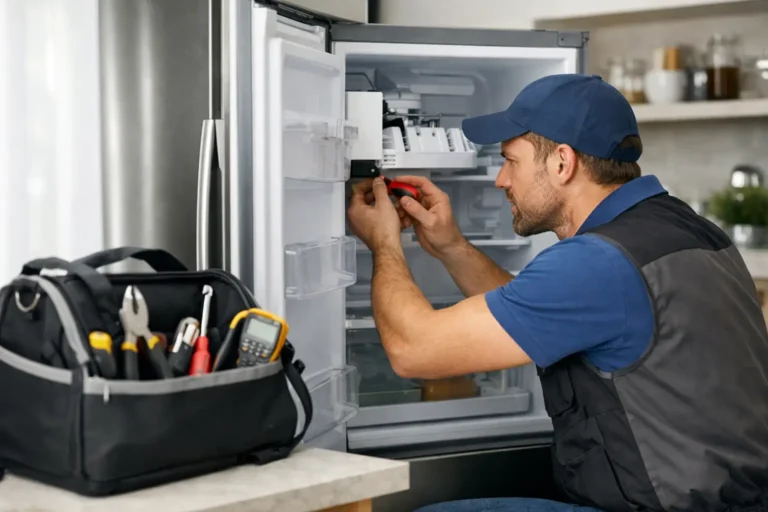
A professional repair should begin with diagnosis, not assumptions. The engineer should check temperatures, airflow, fans, defrost behaviour, power supply, electronic controls and visible signs of leaks or icing. On dispenser models, water feed and valve operation may need testing too.
Once the fault is identified, the next step is straightforward explanation. Customers should know what has failed, whether the repair is worthwhile, what the full cost is, and whether parts are covered by a written warranty. If a company cannot explain the issue in plain English, trust becomes difficult very quickly.
For many households, speed matters almost as much as technical skill. A guaranteed arrival window, same-day availability when possible, and a no-fix-no-fee approach reduce the uncertainty that usually comes with appliance breakdowns. That is particularly valuable when a large fridge freezer full of food is already at risk.
Avoiding wasted money on the wrong fix
American-style fridge freezers are one of the easiest appliances to misdiagnose from symptoms alone. A machine that appears dead may simply have a failed start relay. A fridge section that feels warm may be suffering from blocked airflow caused by frost behind the evaporator cover. An intermittent water dispenser may have a pressure issue rather than a failed switch.
Online advice can help with basic checks such as confirming the plug, fuse, door closure and control settings, but beyond that, guesswork becomes expensive. Replacing filters, boards or sensors without testing can quickly cost more than a professional diagnosis.
This is one reason many homeowners in West London choose service-led repair companies over ad hoc tradespeople. Reliability is not just about turning up. It is about accurate fault finding, clear pricing, genuine parts and written labour cover if the same fault returns.
Choosing the right repair service
Not every appliance engineer is set up for American-style refrigeration. These units are heavier, more complex and more brand-sensitive than standard domestic models. It makes sense to ask whether the engineer regularly works on Samsung, LG, Bosch, Neff, Siemens or Miele appliances, and whether they are certified for cooling system work where relevant.
Professional standards matter as well. DBS-checked engineers, fixed quotations, warranty-backed repairs and realistic appointment windows all reduce risk for the customer. If you are letting someone into your home and trusting them with a high-value appliance, transparency should not be optional.
CrownTech Appliances positions its service around exactly those points – same-day in-home repair, certified engineers, fixed-price quotes, no-fix-no-fee support and a 12-month written parts and labour warranty. For customers dealing with urgent cooling faults, that kind of structure is often the difference between a stressful experience and a manageable one.
A few practical checks before you book
There are some sensible checks worth making before arranging a visit. Make sure the appliance has power, the thermostat has not been changed accidentally, and the doors are fully sealing. If the model has a water filter, check whether it is overdue for replacement. If the condenser area is accessible, look for heavy dust build-up restricting heat release.
It is also helpful to note the symptoms clearly. Is the freezer cold but the fridge warm? Is there a loud noise at the back? Has the ice maker stopped at the same time as the dispenser? Did the fault begin after a power cut, moving the appliance, or changing a filter? Details like these can shorten diagnosis time and help identify whether the fault is mechanical, electrical or user-related.
If your appliance is still not performing properly after those checks, the safest move is to get it assessed before the problem spreads. Large fridge freezers rarely fail at a convenient moment, but the right repair usually costs less than the disruption of waiting too long.