A washing machine full of water, a warm fridge freezer or an oven that will not heat properly can turn a normal weekday into a logistical problem. Asking the best questions before booking appliance repair helps you avoid the second problem: unclear costs, missed appointments and repairs with no meaningful guarantee.
A reputable repair company should answer these questions plainly. If the response is vague, rushed or focused on getting a card payment before discussing the fault, keep looking.
Best questions before booking appliance repair
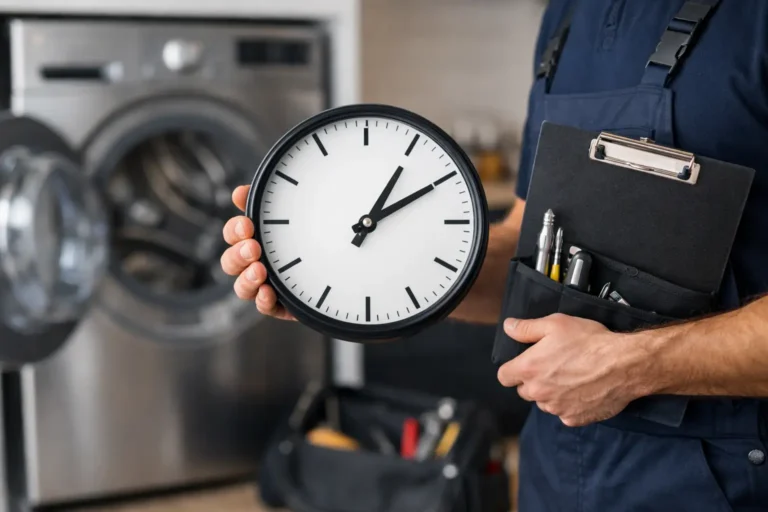
Can you attend today, and what is the arrival window?
“Same-day” can mean very different things. Some companies mean they will call you back today; others mean an engineer will genuinely visit your home and aim to complete the repair that day. Ask what availability is actually open, whether the appointment is confirmed, and how long you may need to wait.
A defined arrival window matters, particularly if you are arranging access for a tenant, taking time away from work or managing a family household. A 90-minute arrival window is far more useful than being told an engineer will come “sometime between morning and evening”. Also ask whether the engineer will call when they are on the way.
Same-day repair is sometimes limited by parts availability. An engineer may be able to diagnose the problem on the first visit but need to return with a specific pump, heating element, control module or door seal. That is not necessarily poor service. The key question is whether the company will explain the next step, source the correct part promptly and give you a realistic return date.
What will I pay if the appliance cannot be repaired?
This is one of the most useful questions to ask before agreeing to a visit. Find out whether there is a call-out charge, a diagnostic fee, a labour charge and a separate charge for parts. Ask if the quoted price includes VAT, parking, congestion-related costs or any evening and weekend supplement.
A fixed-price quote gives you a clearer decision point. The engineer should diagnose the fault, explain what has failed and tell you the total cost before repair work begins. You should not be left guessing whether a straightforward dishwasher repair will become an open-ended hourly bill.
Ask directly about the company’s no-fix-no-fee position. Policies vary, so clarify what happens if the fault cannot be resolved, a part is obsolete, or the appliance is uneconomical to repair. A transparent firm will distinguish between the cost of diagnosis and any charge for a completed repair rather than hiding the detail in small print.
Is repair worthwhile for the age and condition of my appliance?
Not every appliance should be repaired. A quality engineer will help you make that judgement rather than automatically recommending the most expensive option. Tell them the make, model and approximate age when booking, along with the symptoms and any error code on display.
As a general guide, repair is often worthwhile when the appliance is relatively modern, has been dependable until now and needs a common replaceable component. Pumps, thermostats, heating elements, door locks, inlet valves and seals can often be sensible repairs. The calculation changes if an older appliance has repeated faults, a failed main control board, severe corrosion, a refrigerant-system issue or discontinued parts.
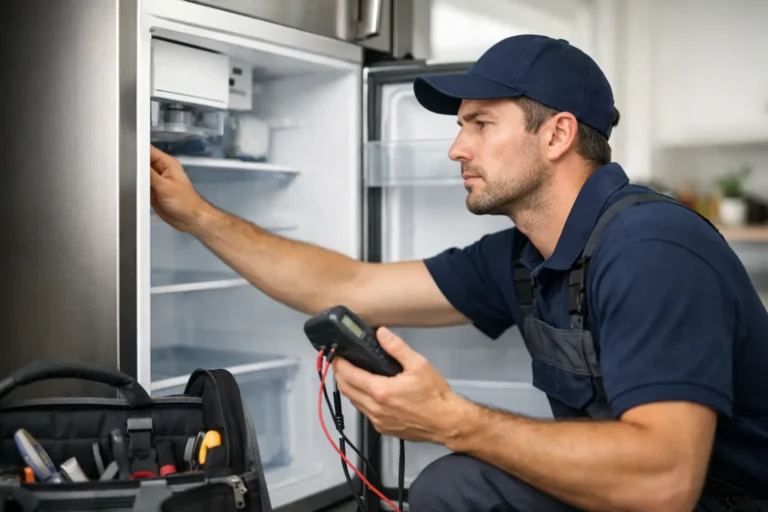
For fridge freezers and American-style fridge freezers, do not decide on price alone. Cooling faults can involve compressors, fans, defrost systems or sealed refrigerant circuits. Ask whether the engineer is F-Gas certified where relevant and whether they can properly diagnose the cooling system. An incorrect diagnosis can be costly and leave food storage unreliable.
Is the engineer qualified and checked for work in my home?
You are allowing someone into your kitchen, utility room or rental property, often at short notice. It is reasonable to ask whether engineers are DBS checked, insured and experienced with your appliance type and brand.
Brand experience is particularly relevant with appliances that use model-specific diagnostics or parts. Bosch, Miele, Samsung, Neff, Siemens and LG machines can display error codes that point towards a fault but do not always identify the failed component on their own. An experienced engineer uses the code alongside testing, appliance history and the manufacturer’s design rather than replacing parts by guesswork.
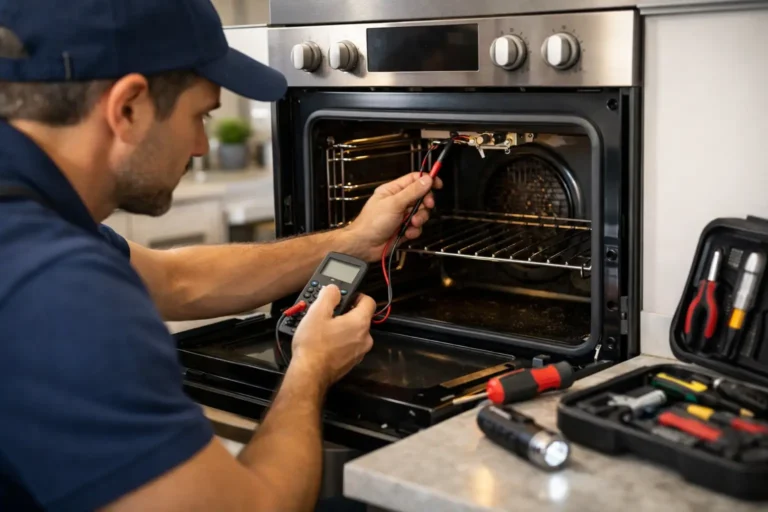
For electric ovens, induction hobs and appliances with complex electronics, ask whether the engineer is trained to work safely on that category. If you have a gas appliance, use an appropriately Gas Safe registered engineer. Never accept an improvised workaround for a safety-related fault.
Will you use genuine or suitable-quality parts?
Parts quality affects both the reliability of the repair and the value of the warranty. Ask whether the company uses genuine manufacturer parts where available, or high-quality compatible components where that is the practical option.
There is a trade-off. Genuine parts can cost more and may take longer to obtain, while a proven compatible part may offer better value for an older machine. What matters is that the engineer explains the choice, confirms the part is suitable for your exact model and does not fit an unknown component simply because it is cheap.
You should also ask whether parts need to be ordered after diagnosis. Most engineers carry common items, but no van can hold every shelf, dispenser, heater or electronic board for every appliance ever made. Clear communication is more valuable than an unrealistic promise that every repair will be finished immediately.
What written warranty comes with the repair?
A verbal reassurance is not the same as a written warranty. Ask how long the warranty lasts, whether it covers both labour and supplied parts, and how to contact the company if the same fault returns.
Read the terms sensibly. A warranty on a replaced pump, for example, will not usually cover a separate issue that develops later with the washing machine’s control board. Equally, it should provide genuine protection if the newly fitted part fails or the original repair was not completed correctly.
CrownTech Appliances provides a 12-month written parts and labour warranty on completed repairs, which gives households and landlords a clear record of what was repaired and the support available afterwards. Whatever company you choose, make sure the warranty is documented on the invoice.
Can you diagnose this specific symptom before the visit?
You do not need to diagnose the appliance yourself, but a few details help the booking team send the right engineer and allow the engineer to arrive better prepared. Describe what happens, when it started and whether the appliance shows an error code, makes an unusual noise, leaks, trips the electrics or fails at a particular point in its cycle.
Have the model number ready if possible. It is often found around the door frame of a washing machine, inside a dishwasher door, on a fridge compartment wall or on a rating plate at the rear or side of an appliance. A photograph is useful, especially for built-in appliances where the full model label may be difficult to access.
Be cautious if a company guarantees the exact fault and price without asking any questions. A blocked filter and a failed drain pump can produce similar symptoms. Proper diagnosis protects you from paying for the wrong repair.
Questions that protect your home before the engineer arrives
Ask whether you should unplug the appliance, turn off the water supply or stop using it until the visit. For a washing machine or dishwasher leak, isolate the water if it is safe to do so and avoid running another cycle. If an appliance is tripping the consumer unit, smells of burning, has visible damage to a cable or is producing smoke, switch it off at the mains if safe and do not use it again.
For fridge freezer faults, keep the doors closed as much as possible to protect food. If food has begun thawing or the appliance is no longer maintaining a safe temperature, move vulnerable items to another fridge freezer or use them promptly in line with food-safety guidance. Do not try to chip ice from internal panels with a knife, as this can damage pipes and turn a repairable defrost issue into a major refrigerant leak.
Finally, ask what access the engineer will need. Built-in ovens, integrated dishwashers and stacked laundry appliances may need surrounding space cleared before work can begin. Let the company know about restricted parking, concierge access, pets or any requirement to contact a tenant first. These small details prevent avoidable delay.
The right repair booking should leave you with an agreed arrival window, a clear explanation of pricing, confidence in the engineer’s credentials and a written warranty after the work is done. When those answers are in place, you can book with far less uncertainty and get your household back to normal sooner.