A fridge that feels warm or a freezer that will not keep food frozen is more than an inconvenience. It can spoil a weekly shop, create avoidable waste and, in some cases, put food safety at risk. This guide explains how to troubleshoot fridge freezer temperature issues without taking risks, and when the fault needs a qualified appliance engineer.
Before changing settings or removing panels, check the actual temperatures. A fridge should normally run between 3°C and 5°C, while the freezer should hold -18°C. The display is useful, but a separate appliance thermometer placed inside for several hours gives a more reliable reading.
Check the simple causes first
Many temperature complaints are caused by airflow, loading or settings rather than a failed cooling component. Start with the controls. A dial can be knocked while cleaning, or a digital setting can be changed accidentally. If the appliance has a holiday mode, eco mode or fast-freeze setting, confirm it is operating as intended.
Next, look at how the fridge freezer is loaded. Food pressed against rear vents, packed tightly around fan outlets or stacked in front of internal air channels prevents cold air from circulating. A very empty fridge can also fluctuate more quickly when the door opens, although it should still be capable of maintaining a safe temperature.
Check that doors close firmly. A jar, drawer or shelf slightly out of position can stop the seal making full contact. Run your hand around the door gasket and look for splits, hardened sections, mould or areas pulling away from the door. If you can easily slide a sheet of paper out when the door is shut, the seal may not be holding properly.
Finally, consider recent changes in the kitchen. A fridge freezer beside an oven, radiator or sunny window has to work much harder. Poor ventilation around an integrated appliance can have the same effect. Do not push a freestanding model hard against the wall if its instructions require clearance for airflow.
How to troubleshoot fridge freezer temperature issues safely
If the basic checks have not resolved the problem, observe the appliance for a full day rather than continually adjusting the thermostat. Each change needs time to take effect. Repeatedly turning the setting colder can make diagnosis harder and may cause food in the fridge compartment to freeze.
Listen for the normal operating pattern. Most fridge freezers cycle on and off, and modern frost-free models may run fans or make occasional clicking and gurgling sounds. What is not normal is a compressor running almost constantly while temperatures remain too warm, repeated clicking without the appliance starting, or a loud fan noise followed by poor cooling.
Check for frost in the freezer. A light coating can be normal, but thick ice on the back wall, around drawers or behind the internal panel often points to a defrost issue, an air leak through a damaged seal, or a blocked drain. Frost restricts airflow, so the freezer may stay cold while the fridge section becomes too warm.
If your model is not frost-free, a full manual defrost may restore normal operation. Switch it off, remove food to a suitable cold place, leave the doors open and allow all ice to melt naturally. Place towels around the appliance for water. Never chip ice away with a knife, screwdriver or sharp tool, as puncturing a refrigerant line can make the appliance uneconomical to repair.
For frost-free models, recurring ice after a defrost is a useful clue, not a permanent fix. The likely cause may be a failed heater, sensor, fan, drain problem or electronic control fault. These parts need proper testing rather than guesswork.
Inspect vents, fans and accessible coils
Look inside the compartments for blocked vents. In a frost-free appliance, cold air is usually moved from the freezer to the fridge by a fan and ducting. If the freezer is cold but milk, meat and other chilled food are warming up, an iced-over evaporator or failed fan is a common possibility.
With the appliance unplugged, you can carefully remove dust from accessible external condenser coils or vents using a soft brush or vacuum attachment. Not every modern model has exposed coils, and integrated units may not provide safe access. Do not bend pipework, force panels or spray water near electrical parts.
A dirty condenser can make the compressor work longer, especially in a warm kitchen. However, cleaning alone will not cure a weak compressor, refrigerant leak, faulty start device or control-board issue. If the appliance is unusually hot at the sides or rear, that can be normal during operation. It becomes a concern when cooling is poor, the compressor runs continuously or there is a burning smell.
Keep food safe while you investigate
Food safety should guide the next step. Keep fridge doors shut as much as possible and move high-risk foods such as raw meat, cooked leftovers, dairy and opened chilled products to another working fridge if the temperature rises above 8°C for an extended period.
A freezer that has started defrosting needs a more careful assessment. Food that still contains ice crystals and has remained properly cold may often be refrozen or cooked, depending on the item and its condition. Fully thawed food, particularly meat, fish and prepared meals, should not be left at room temperature. When in doubt, follow the product label and prioritise safety over saving the contents.
Do not rely on smell alone. Food can become unsafe before it looks or smells different.
Signs the fault needs professional diagnosis
Some faults are not suitable for DIY repair. Refrigerant systems are sealed and must only be worked on by an appropriately qualified F-Gas engineer. Attempting to repair a suspected gas leak or compressor fault yourself can cause further damage and does not address the legal and safety requirements around refrigerant handling.
Arrange a professional diagnosis if you notice any of the following:
- The appliance has power and the compressor runs, but neither compartment reaches temperature.
- The freezer is cold but the fridge is consistently warm despite clear vents and correct settings.
- Thick frost returns quickly after a complete defrost.
- You hear repeated clicking, see error codes or find the appliance tripping the electrics.
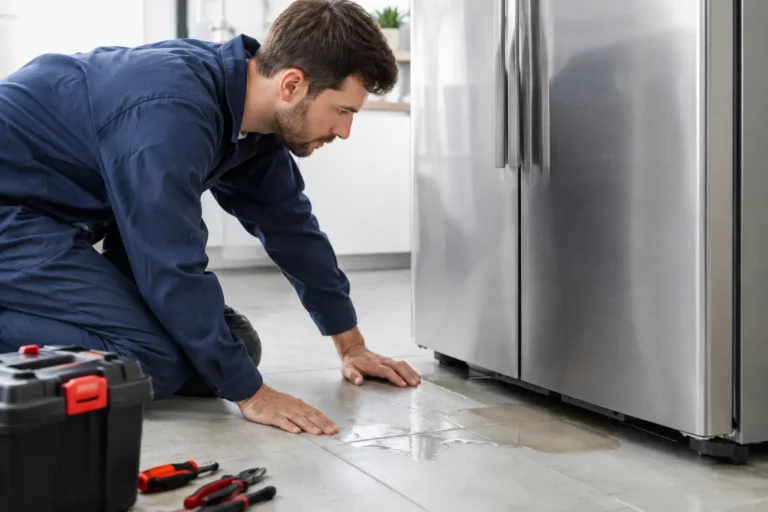
- There is water pooling regularly, an unexplained chemical smell, damaged pipework or a burning smell.
An engineer can test sensors, thermostats, fans, heaters, start relays, control boards and compressor performance in the correct order. This matters because several faults can create similar symptoms. Replacing a thermostat when the real issue is an iced evaporator or failed fan wastes both time and money.
For landlords and busy households, a prompt repair can also prevent a minor airflow or defrost fault becoming a compressor issue through prolonged strain. CrownTech Appliances provides in-home fridge freezer diagnosis across West London, with certified engineers, fixed-price quotes before repair and a 12-month written parts and labour warranty.
Repair or replace: making a practical decision
The right choice depends on the appliance age, fault, model type and repair cost. A quality fridge freezer with a replaceable fan, thermostat, seal or defrost component is often well worth repairing. Built-in and American-style models can be particularly expensive and disruptive to replace, so a diagnosis is usually sensible before making a decision.
Replacement may be the better option where an older appliance has a major sealed-system failure, recurring faults or poor energy performance, particularly if suitable parts are no longer available. A clear diagnosis lets you make that choice with facts rather than replacing an appliance that could have been repaired reliably.
If your fridge freezer cannot hold 5°C in the fridge or -18°C in the freezer after the straightforward checks, protect the food first and arrange expert help. Fast action is usually cheaper than waiting for a small temperature problem to become a complete breakdown.