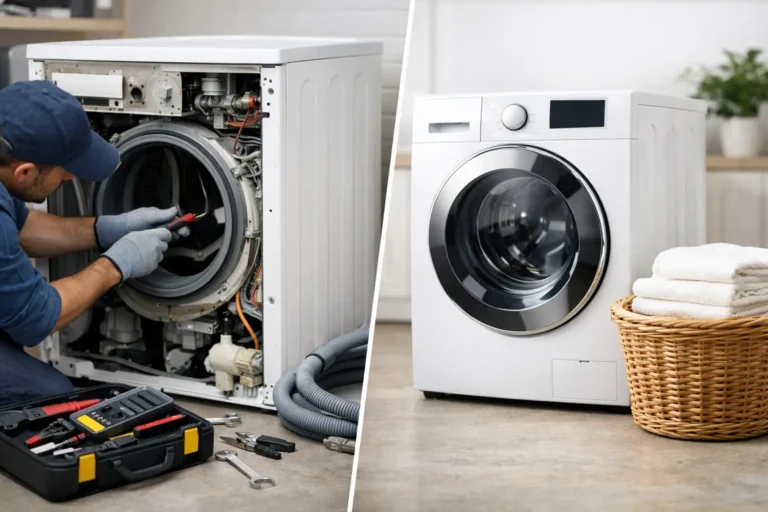
A failed washing machine in a rented flat can quickly become a dispute about cost, access and urgency. Understanding landlord appliance repair responsibilities before a fault occurs helps both parties act promptly, protect the property and avoid an unnecessary argument over who pays.
For most tenancies in England, the answer depends on two things: what the tenancy agreement says and whether the appliance was supplied by the landlord. There are also separate safety duties that cannot simply be written away. A clear record of the appliance, the fault and all communication makes the repair process far more straightforward.
When is a landlord responsible for appliance repairs?
If a landlord provides an appliance as part of a furnished or part-furnished tenancy, they will usually be responsible for keeping it in working order. That commonly covers a washing machine, dishwasher, fridge freezer, oven, hob, tumble dryer or integrated appliance listed in the inventory or tenancy agreement.
The key word is “usually”. Landlords have a statutory duty to repair the structure and exterior of the property, along with installations for water, gas, electricity, sanitation, heating and hot water. However, that legal duty does not automatically extend to every standalone domestic appliance. The contractual position in the tenancy agreement is therefore particularly important.
A well-written agreement should state whether supplied appliances are included in the landlord’s repair obligations. If it says the washing machine is provided for the tenant’s use, but the landlord accepts no responsibility for repair or replacement, that may change the outcome. Even then, an appliance cannot be left in an unsafe condition.
Where a property is advertised as furnished, an inventory is useful evidence. It should identify the appliances supplied, their condition at move-in and, ideally, serial numbers or photographs. This prevents confusion over whether an item was part of the tenancy or brought in by the tenant.
Appliances brought in by the tenant
A tenant is normally responsible for repairing or replacing appliances they own. If they buy their own microwave, fridge or washing machine, the landlord is not generally expected to maintain it.
There is one practical exception: if a tenant-owned appliance causes damage to the property or creates a safety concern, the landlord may need to deal with the property itself. For example, a leaking tenant-owned dishwasher could damage kitchen units or flooring. The cost may still be recoverable from the tenant if their appliance or misuse caused the problem.
Integrated appliances and built-in kitchens
Built-in appliances deserve particular care. An integrated dishwasher, oven or fridge freezer is often fitted as part of the kitchen, so it is more likely to be treated as supplied equipment. Repairs can also involve cabinet doors, plumbing connections, electrical isolation or ventilation clearances.
This is not a job for trial and error. Incorrect fitting can lead to water damage, overheating or an appliance that fails again shortly after repair. A qualified engineer should diagnose both the appliance fault and any installation issue before parts are ordered.
Landlord appliance repair responsibilities and safety
A landlord may not have to replace an old appliance simply because a newer model is more efficient. But if an appliance they supply is unsafe, they must act. Exposed wiring, electrical burning smells, repeated tripping, a damaged plug, gas-related concerns or a fridge freezer that cannot maintain safe temperatures should never be treated as minor inconveniences.
Landlords must also ensure that electrical equipment supplied with a tenancy is safe. Formal portable appliance testing is not a universal legal requirement for every rental appliance, but safety checks, maintenance records and prompt professional attention to faults are sensible evidence of responsible management.
Gas appliances have stricter requirements. A gas cooker or boiler must be dealt with by an appropriately qualified Gas Safe engineer, and landlords have annual gas safety responsibilities. Tenants should not attempt repairs, remove covers or continue using an appliance if they smell gas or suspect a carbon monoxide risk.
For refrigeration appliances, damaged seals, poor cooling and unusual compressor noise can result in food spoilage, but a refrigerant leak or sealed-system fault needs an engineer with the right certification. For cooling-system work, F-Gas-qualified handling is essential.
What tenants are expected to do
Tenants do not become responsible for every breakdown simply because they use the appliance every day. Appliances wear out. Pumps fail, heating elements burn out, door locks break and control boards can develop faults without any misuse.
However, tenants are expected to use supplied appliances with reasonable care and report faults without delay. Waiting weeks to mention a small leak, for example, can turn a simple hose or seal repair into damaged flooring, mould or a claim over avoidable loss.
Tenants will commonly be responsible where the fault results from neglect, accidental damage or improper use. Examples include forcing a washing machine door, overloading a tumble dryer, using the wrong detergent, failing to clean filters where the instructions require it, or damaging a ceramic hob with heavy impact.
Small consumable items can also fall to the tenant, depending on the agreement. Oven bulbs, fridge light bulbs and routine cleaning are often treated differently from a failed motor, thermostat or electronic component. The dividing line should be stated clearly rather than assumed.
Reporting a fault properly
A short, factual report gives the landlord or managing agent what they need to arrange the right repair. State the appliance, make and model if available, what it is doing, when the issue started and whether there are safety concerns. Photographs or a brief video can be helpful for leaks, error codes or unusual noises.
A tenant should stop using an appliance where it is leaking, smoking, repeatedly tripping the electrics, producing a burning smell or failing to cool food safely. For an urgent fault, reporting it by telephone as well as in writing creates a clear record and speeds up action.
Do not arrange a repair and deduct the cost from rent without written agreement or proper advice. Even where a repair is clearly the landlord’s responsibility, unauthorised work can create disputes over price, workmanship and whether the fault was correctly diagnosed.
How quickly should a landlord arrange a repair?
There is no single number of days that applies to every appliance fault. The reasonable timescale depends on the impact on health, safety and normal occupation of the home.
A fridge freezer that has stopped cooling, a cooker with an electrical fault, or a washing machine leaking into a downstairs property needs swift attention. A secondary appliance, such as a tumble dryer in a home with access to drying space, may be less urgent. That does not mean it should be ignored – it means the repair priority can be proportionate.
Good property management means acknowledging the report quickly, arranging access, authorising diagnosis and communicating if a part is required. Delays often happen because an engineer attends without the model number, a tenant cannot provide access, or approval is held up after the fault has been identified.
For landlords managing homes across West London, a same-day diagnostic visit can be particularly valuable for fridge freezers, ovens and laundry appliances. It establishes whether the appliance can be repaired economically, whether it is safe to leave isolated, and whether a replacement is genuinely the better decision.
Repair or replacement: making the right call
A landlord is not always obliged to provide a brand-new replacement the moment an appliance fails. If a suitable repair restores the supplied appliance to safe, reliable working order, repair is often the more cost-effective route.
The decision should consider the appliance’s age, fault type, parts availability and expected reliability after repair. A quality washing machine with a failed pump may be well worth repairing. An older fridge freezer with a compressor fault, poor efficiency and unavailable parts may be more sensibly replaced.
Price should not be the only factor. A cheap repair using non-genuine or unsuitable parts can lead to repeat visits and more tenant inconvenience. A clear fixed-price quote, an explanation of the fault and a written parts and labour warranty give landlords a defensible basis for the decision.
CrownTech Appliances provides in-home diagnosis and repair for major domestic appliance brands, with DBS-checked engineers, clear quotes and a 12-month written parts and labour warranty. For a landlord, that means the repair record is as professional as the repair itself.
Preventing avoidable disputes
The simplest way to manage appliance responsibility is to make it clear before keys change hands. List every supplied appliance in the inventory, record its condition, provide basic operating information and state who handles repairs, routine care and consumable items.
Landlords should keep service invoices and safety records. Tenants should report faults promptly and retain copies of messages. Both parties benefit from agreeing access arrangements early, particularly where a repair requires a return visit or a replacement part.
An appliance breakdown is rarely convenient, but it does not need to become a prolonged tenancy problem. Clear responsibilities, early reporting and a properly diagnosed repair give everyone the best chance of getting the household back to normal with minimal disruption.