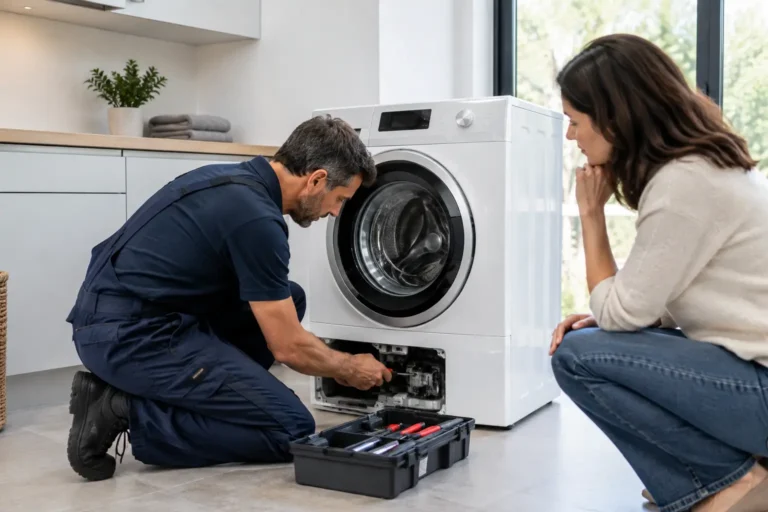
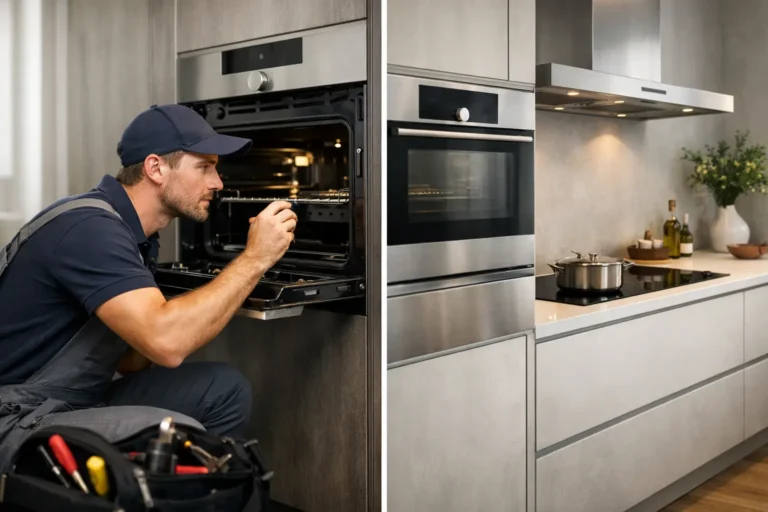
A washing machine that stops mid-cycle or a fridge freezer that is no longer cold creates an immediate problem, but the uncertainty around repair costs often causes just as much stress. Households want a clear answer: what is wrong, what will it take to fix, and is the repair genuinely worth paying for? A professional repair service should give you those answers before work begins, not after an engineer has fitted a part.
What appliance repair costs should include
A meaningful quote is more than the price of a spare part. It should account for diagnosing the fault, the engineer’s visit, labour, any required parts and the warranty covering the completed work. If one of these elements is unclear, the cheapest initial figure can quickly become the most expensive option.
The fault itself matters far more than the appliance category alone. A dishwasher that will not drain may need a straightforward blockage cleared or a replacement drain pump. An oven that will not heat could have a failed element, a thermostat issue or an electrical fault that requires more investigation. The symptom may look similar from the outside, but the work involved can be very different.
A clear, fixed-price quote removes that guesswork. It allows you to decide whether to proceed before the repair is carried out, rather than being presented with added charges once the appliance has been dismantled.
Diagnosis is a necessary part of the job
Modern appliances use sensors, control boards, safety devices and electronic diagnostics. Replacing parts based on a guess is rarely good value and can leave the original fault unresolved. Proper diagnosis identifies the failed component and checks whether another issue caused it to fail.
For example, repeatedly replacing a heating element without checking for a leak, wiring fault or control issue can lead to the same breakdown returning. Paying for accurate diagnosis at the outset is often what prevents wasted parts and repeat call-outs.
The main factors that affect repair costs
The price of a repair depends on the appliance, fault and parts required. It also depends on how easily the engineer can access the component and whether the work needs specialist certification or additional testing.
Parts vary considerably between brands and models. A common pump or door seal may be readily available, while an inverter motor, electronic module or sealed refrigeration component can cost more and may need to be ordered specifically for your model. Genuine parts can carry a higher upfront price than unverified alternatives, but they are designed for the appliance and give a stronger basis for a lasting repair.
Age is another factor, though it should not be used as a simple rule to write off an appliance. A well-maintained ten-year-old washing machine with a failed pump may be an excellent repair candidate. A newer machine with extensive electronic damage may need a more careful cost comparison. The engineer should assess the condition of the appliance as a whole, not just the part that has failed.
Access can affect the time needed for the work. Integrated dishwashers, built-in ovens and American-style fridge freezers can require more careful removal and refitting than freestanding appliances. In a flat, a large refrigeration appliance may also need safe handling through narrow hallways or communal areas.
Refrigeration repairs need the right qualifications
Fridge freezers, American-style fridge freezers and wine coolers are not all repaired in the same way. A door hinge, fan motor or defrost component may be a standard appliance repair. Work involving the sealed cooling system, however, requires an appropriately F-Gas-certified engineer.
This is not a detail to overlook in search of a lower price. Cooling-system faults need correct equipment, safe refrigerant handling and accurate testing. An engineer who is qualified for the work can explain whether the issue is economically repairable and what the repair involves.
When is a repair better value than replacement?
Replacement is not automatically the sensible answer when an appliance fails. A repair is often better value when the fault is isolated, the appliance is otherwise performing well and the repair carries a meaningful parts and labour warranty.
Start by considering the appliance’s age, its original quality and the likely remaining service life after repair. A premium washing machine, oven or dishwasher may be built with more durable components and can justify a repair that would be harder to support on a budget model nearing the end of its working life.
Then compare the full replacement cost, not just the sale price. A new appliance can bring delivery charges, installation, disposal of the old unit and, for integrated models, possible cabinet-door adjustments. A fridge freezer replacement may also mean time off work to wait for delivery and the risk of food waste while you are without reliable cooling.
There are situations where replacement is more practical. Severe corrosion, repeated unrelated faults, major damage to a drum or cabinet, or a costly component on an appliance already near the end of its expected life can make a new machine the more sensible choice. The right recommendation is the one that gives you the best value over the next few years, not simply the lowest amount due today.
Questions to ask before approving a repair
You do not need technical knowledge to make a sound decision, but you do need enough information. Ask what fault has been found, whether the quoted price includes parts and labour, and how long the repair is warranted for. It is also reasonable to ask whether a genuine manufacturer-approved part is being used and whether there are signs of further wear that could affect reliability.
Be cautious with vague estimates that change once work starts. A reputable engineer may need to inspect the appliance before confirming the fault, but should be able to explain the next step clearly. If a part has to be ordered, you should know whether a return visit is needed and whether the appliance can be safely used in the meantime.
For an urgent breakdown, speed still matters. A missed appointment can turn a manageable dishwasher fault into days of washing up, or a fridge freezer issue into lost groceries. A guaranteed arrival window, DBS-checked engineer and clear communication are service standards that protect your time as well as your budget.
Why a warranty matters as much as the quote
The lowest repair cost is not necessarily the lowest risk. A written warranty on both parts and labour shows that the repair company stands behind its diagnosis, workmanship and components. It gives you a clear route back if the repaired fault returns within the warranty period.
This matters particularly with appliances that are used daily. Washing machines, tumble dryers and fridge freezers work hard in busy family homes and rented properties. A repair should restore dependable use, not simply get the appliance running long enough for the engineer to leave.
CrownTech Appliances provides fixed-price quotes once the fault has been diagnosed, a no-fix-no-fee approach and a 12-month written parts and labour warranty. That structure gives households a straightforward decision: understand the fault, see the agreed cost and approve the work only when it makes sense.
Avoiding unnecessary appliance repair costs
Some faults cannot be prevented, especially electronic failures, but basic care reduces avoidable damage. Clean washing machine filters, avoid overloading the drum and use the recommended detergent amount. Clear dishwasher filters regularly and do not ignore poor drainage or unusual noises. Keep fridge freezer door seals clean, allow ventilation around the appliance and investigate temperature changes early.
Small warning signs are often less costly to address than a complete breakdown. A washing machine that intermittently fails to drain, an oven that takes longer to heat or a fridge that runs constantly deserves attention before the fault affects other components. Equally, stop using an appliance immediately if there is a burning smell, electrical sparking, water leaking near electrics or a tripping circuit.
A fair repair decision starts with facts rather than assumptions. Get the appliance assessed, ask for a clear fixed quote and weigh it against the true cost of replacement. When the repair is safe, properly diagnosed and backed by a written warranty, restoring an appliance you already know and rely on can be the most practical option.