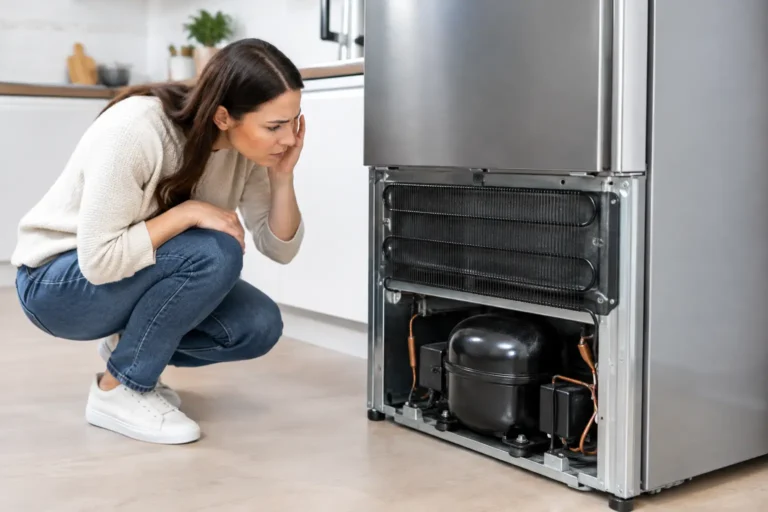
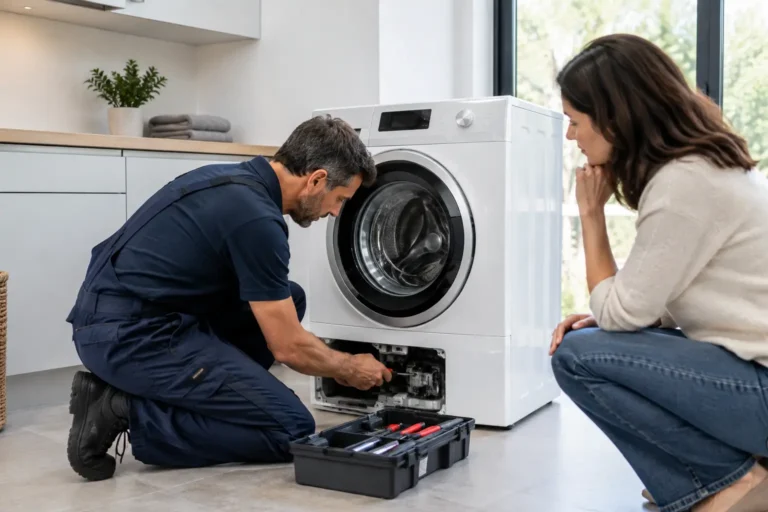
A fridge freezer that is running constantly but no longer keeping food properly cold is not a fault to ignore for a few more days. It may indicate a sealed-system problem, and F-Gas fridge freezer repair should only be carried out by a suitably certified engineer. Refrigerant work is specialised, regulated and very different from replacing a door seal, thermostat or shelf.
For busy households, the immediate concern is simple: protect food, avoid a larger breakdown and get a clear answer on whether the appliance is worth repairing. The right diagnosis matters because a warm fridge can be caused by several faults – not all of them involve refrigerant – and the repair approach, cost and likely outcome depend on finding the real cause first.
What F-Gas fridge freezer repair means
F gas is the common term used for fluorinated greenhouse gases, including refrigerants used in many cooling appliances. A fridge freezer has a sealed refrigeration circuit containing refrigerant, compressor oil and components such as the compressor, condenser, evaporator and capillary tubing. When this circuit is intact, refrigerant should not need topping up during normal use.
If refrigerant has escaped, there is usually a leak or a damaged component that must be identified and repaired before the system can be recharged, evacuated and tested. Simply adding refrigerant without resolving the leak is not a proper or lasting repair. It can leave the appliance underperforming again soon afterwards and may not meet the required standards for refrigerant handling.
A qualified F-Gas engineer has the equipment and certification to work safely on the sealed system. That includes leak detection, pressure testing, vacuuming the system to remove moisture and air, and charging the appliance with the correct refrigerant and quantity where a repair is viable.
Signs that could point to a refrigerant fault
Poor cooling alone does not automatically mean a gas leak. A blocked airflow path, failed fan motor, faulty sensor, defrost issue or worn door seal can create very similar symptoms. However, a sealed-system fault becomes more likely when the appliance shows a combination of persistent cooling problems.
You may notice that the fridge is warm while the freezer only partly freezes food, or that the motor runs for long periods with little improvement. Frost may form in one small area of the evaporator rather than evenly across it. In some cases, there may be an unusual hissing sound, oily residue around pipe joints, or visible corrosion on accessible refrigeration pipework.
A sharp rise in temperature needs prompt attention. Keep the fridge at 5°C or below, and a freezer at -18°C. If chilled food has been above 8°C for an extended period, follow food safety guidance and do not rely on smell or appearance alone. Move food to another appliance or use a cool box with ice packs while waiting for a diagnosis.
Why topping up the gas is not the answer
It is understandable to ask whether an engineer can simply put more gas in. On a correctly functioning fridge freezer, the refrigerant remains within the closed circuit for the life of the appliance. A low charge means something has allowed it to escape, and recharging without leak repair is only a temporary measure at best.
There is also a technical reason to avoid shortcuts. The appliance needs the precise refrigerant type and specified charge to cool efficiently. An incorrect charge can reduce cooling performance, increase compressor strain and shorten the life of a component that may already be working too hard.
The proper process is to assess the system, locate the likely source of the fault, explain whether the repair can be completed reliably, and provide a clear quote before chargeable work goes ahead. That approach may take longer than a quick top-up, but it prevents customers paying for a result that does not last.
What happens during a professional diagnosis
A competent home visit begins with checks that rule out more straightforward faults. The engineer will assess temperature settings, door seals, airflow, condenser condition, fan operation, compressor behaviour and any fault codes displayed by the appliance. This is valuable because many fridge freezer failures can be repaired without opening the refrigerant circuit.
Where the evidence suggests a sealed-system issue, further tests may be required. Depending on the appliance and the suspected fault, the engineer may inspect joints and pipework, use approved leak-detection methods, and assess pressures and cooling patterns. Not every leak is accessible or economical to repair, particularly where it is concealed within insulated cabinet walls.
If a repair is practical, the damaged part or joint is repaired or replaced. The system is then pressure-tested for integrity, evacuated to remove contaminants, and recharged with the manufacturer-specified refrigerant. The appliance must be monitored to confirm it reaches and holds the correct operating temperatures.
This is why an accurate diagnosis is more useful than a guess based on a warm cabinet. It identifies whether you are dealing with a repairable component fault, a viable sealed-system repair, or an appliance that has reached the point where replacement is the more sensible financial decision.
Is F Gas fridge freezer repair worth it?
It depends on the appliance’s age, brand, capacity, fault location and condition overall. A relatively modern premium fridge freezer can often justify a professional repair, especially if the cabinet, doors, electronics and compressor are otherwise in good order. American-style fridge freezers and integrated models can also be costly and disruptive to replace, so a proper assessment is worthwhile.
The picture changes where the appliance is older, inefficient, heavily corroded or has an inaccessible internal leak. Labour-intensive sealed-system work can become disproportionate to the value of the fridge freezer, and replacement may offer better long-term value and lower running costs.
Be cautious of fixed assumptions such as “a gas leak always means replacement” or “it is always cheaper to repair”. Both can be wrong. The sensible choice comes after a qualified engineer has established the fault, the parts required and the likelihood of a durable result.
What you can do before the engineer arrives
Do not attempt to pierce, cut or heat refrigeration pipes. Do not use DIY refrigerant cans, sealants or online repair kits on a domestic fridge freezer. Aside from the safety and legal considerations, these products can contaminate the system and make a later professional repair more difficult.
Instead, make a note of when the fault began, whether either compartment is still cooling, any error codes, and whether the compressor is running constantly or clicking on and off. If practical, take a photo of the model number plate. It is usually inside the fridge compartment or on the side wall, and it helps confirm the appliance specification and parts availability.
Give the appliance space to ventilate and check that the doors are closing fully, but avoid repeatedly switching it off and on. If the compressor has overheated, disconnecting the appliance for a short period may allow it to cool, yet this does not resolve the underlying fault. Keep the door openings to a minimum to preserve any remaining cold air.
Choosing the right engineer for cooling repairs
Refrigeration faults require more than general appliance experience. Ask whether the engineer is certified to handle F gases and whether they will diagnose the cause rather than offer an unexplained recharge. You should also know the call-out or diagnostic arrangement, the quote before repair, and the warranty provided on completed work.
For households in West London, CrownTech Appliances provides in-home fridge freezer diagnostics with certified engineers, fixed-price quotes where applicable and a 12-month written parts and labour warranty on completed repairs. A guaranteed 90-minute arrival window and a no-fix-no-fee approach are designed to remove the usual uncertainty when a vital appliance fails.
A fridge freezer does not need to be written off at the first sign of poor cooling, but it does need the right attention. Arrange a qualified assessment promptly, protect your food in the meantime, and make the repair-or-replace decision with facts rather than guesswork.