A washing machine that stops mid-cycle, a fridge that is no longer cold or an oven that will not heat can disrupt the whole household within hours. This Ealing appliance repair guide explains what you can safely check, which faults need immediate attention and how to decide whether a professional repair is the sensible option.
The aim is not to turn a breakdown into a DIY project. Modern appliances rely on electronics, water systems, heating elements and sealed cooling circuits that need the right diagnostic approach. A few simple checks can rule out an obvious cause. Beyond that, a qualified engineer can identify the failed part without creating a more expensive problem.
Start with safety, not the fault code
If you notice burning smells, smoke, sparks, a damaged power cable or repeated tripping at the consumer unit, switch the appliance off at the socket if it is safe to do so. Do not keep resetting the circuit breaker or attempt to run another cycle. Unplug the appliance where you can reach the plug without moving it unsafely, and arrange a professional inspection.
Water leaks deserve the same caution. Turn off the appliance, close the local water supply valve if you can identify it, and protect nearby electrical sockets and flooring. A small puddle beneath a dishwasher may be a loose hose, but it may also indicate a failed pump, door seal or internal leak. Continuing to use it can damage cabinets, flooring and the appliance’s electrical components.
For fridge freezers, a warm interior is time-sensitive. Keep the door closed as much as possible and move high-risk chilled food elsewhere if the temperature is climbing. Food that has been held above a safe chilled temperature for too long should not be treated as safe simply because the appliance starts working again.
Ealing appliance repair guide: useful checks by appliance
Before booking a repair, take a moment to note what happened, when it started and whether an error code appeared. This helps an engineer arrive prepared and can shorten the diagnosis. Check the model number too, usually found on a label inside the door, on the rear panel or around the appliance frame.
Washing machines and tumble dryers
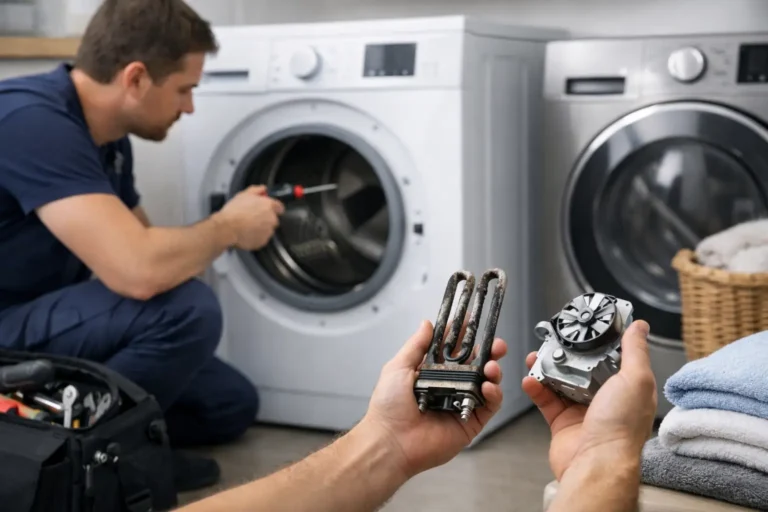
A washer that will not start may have a door that is not closing correctly, a selected delay timer or a power supply issue. Check that the plug is secure, the socket is working and the door closes firmly. If the machine has stopped with water inside, do not force the door open. A blocked filter, drain hose obstruction or failed drain pump are common causes, but draining and dismantling the machine without care can flood the kitchen or utility room.
Poor spinning is often linked to an unbalanced load, particularly with towels, bedding or a single heavy item. Try redistributing the load once. If the machine still bangs loudly, walks across the floor or leaves clothes soaking wet, stop using it. Worn bearings, suspension faults and motor problems get worse when a machine is repeatedly run while unstable.
With tumble dryers, clean the lint filter and empty the water container on condenser models. If drying times remain unusually long, the appliance may have restricted airflow, a heater fault, a thermostat issue or a problem with the condenser system. Never operate a dryer with a blocked filter or venting route, as overheating is a real risk.
Dishwashers
When a dishwasher leaves standing water, first check that the filter is clear of food debris and that the waste connection under the sink has not been blocked. Use only dishwasher-safe detergent and the correct programme. Excess foam from washing-up liquid can cause leaks and trigger anti-flood systems.
If the dishwasher is not cleaning properly, check the spray arms can rotate and that their jets are not blocked. White marks may be a salt, rinse-aid or water-hardness setting issue rather than a mechanical fault. However, cold washes, poor drainage, leaks or recurring error codes usually need diagnosis of the heater, pump, inlet valve or sensors.
Fridge freezers and American-style fridges
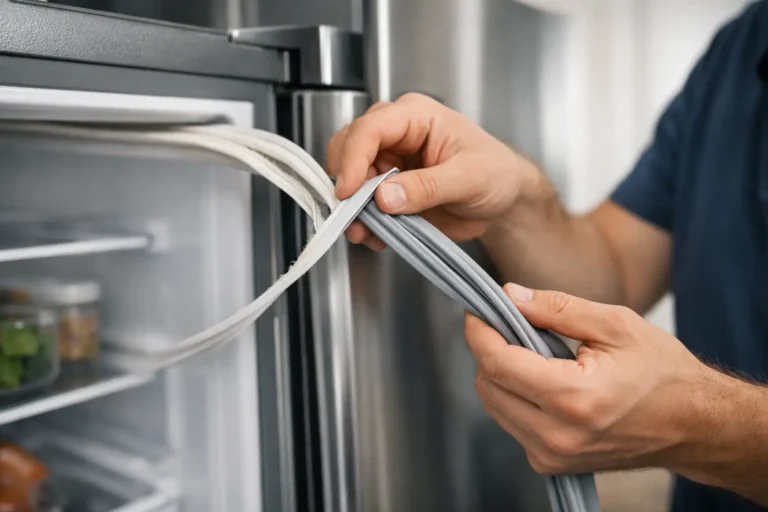
A fridge freezer should be level, have room for airflow around it and be used with clean door seals. Frost build-up can sometimes result from a door being left slightly open, while water beneath the salad drawer may be caused by a blocked defrost drain.
The trade-off is simple: these checks are sensible, but sealed refrigeration systems are not a DIY repair. If the appliance is warm, running constantly, clicking repeatedly or showing a cooling-related fault, it may have a compressor, fan, control-board or refrigerant issue. Work involving refrigerant must be handled by an appropriately F-Gas certified engineer. This is particularly relevant for large American-style fridge freezers, where a failed cooling system can quickly lead to food loss and water dispenser problems.
Electric ovens, induction hobs and coffee machines
An electric oven that has power but does not heat evenly may have a failed element, thermostat, fan motor or selector switch. Do not remove panels or work on live electrical connections. An oven can appear switched off while components remain hazardous, and incorrectly fitted elements can damage wiring or controls.
For an induction hob, check whether the cookware is induction-compatible and positioned correctly. If one zone will not heat, the display is flashing or the glass is cracked, stop using the affected zone. Cracked glass is not merely cosmetic: moisture can reach electrical parts beneath the surface.
Coffee machines commonly suffer from scale, blocked water paths, worn seals or brewing-unit faults. Use the manufacturer-approved descaling process where applicable. If it leaks internally, trips electrics or produces unusual noises, avoid repeated use. Water and internal electrics are not a combination to ignore.
Repair or replace: make the decision on evidence
Replacement is not automatically the cheaper option. A good-quality appliance with a straightforward component failure can often be repaired for far less than the cost of a new equivalent model, especially where the cabinet, drum, motor or cooling system is otherwise sound.
Age matters, but it is only one factor. A five-year-old premium washing machine with a failed pump may be an excellent repair candidate. A much older machine with failing bearings, rust, repeated electronic faults and poor efficiency may be harder to justify. Availability of genuine parts, the appliance’s service history and the cost of the repair all matter.
Ask for a clear diagnosis and a fixed-price quote before work begins. This removes the uncertainty of an open-ended labour bill and gives you a fair basis for comparing repair against replacement. Be cautious of vague estimates made without inspecting the appliance, particularly for faults that could have several possible causes.
What dependable local repair should look like
A professional repair visit should be organised around more than arriving with a toolbox. You should know when the engineer is expected, what the call-out or repair cost covers, and what happens if the fault cannot be fixed. DBS-checked engineers, appropriate certification for cooling appliances, genuine or approved-quality parts and a written parts-and-labour warranty all provide practical protection.
For busy households, a defined arrival window is also valuable. Waiting in all day for an engineer is not a minor inconvenience when there are school runs, work calls, tenants or food that needs saving. A 90-minute arrival window makes the appointment easier to plan around and signals that the service is being managed properly.
CrownTech Appliances provides same-day in-home repairs across Ealing and wider West London where availability allows, with fixed-price quotes, a no-fix-no-fee policy and a 12-month written warranty on parts and labour. Those commitments matter most when the appliance is essential and you need a clear answer rather than another uncertain appointment.
Help the engineer fix it on the first visit
Clear access is one of the simplest ways to avoid delay. Move loose items away from the appliance, make the model number available and keep any error code written down. For integrated appliances, mention this when booking, as access may require more time. If the appliance has leaked, explain where the water appeared and whether it happened during filling, heating or draining.
Do not dismantle panels in advance or order a part based only on an online symptom search. The same error code can be caused by different faults, and a replacement part cannot correct an underlying wiring, drainage or control issue. Accurate diagnosis is what protects your budget.
A reliable repair should leave you with more than a working appliance. You should understand what failed, why the repair was appropriate and how to reduce the chance of the same issue returning. That clarity is often the difference between a stressful breakdown and a problem that is properly resolved.