A washing machine should make a steady, familiar sound, not shake the utility room floor or turn a spin cycle into a metallic racket. Before trying to silence a noisy washing machine, identify when the noise happens. A rattle while filling, a thud during spinning and a grinding sound as the drum turns point to very different causes – and some are safe to check yourself while others need an engineer.
The practical aim is not simply to make the machine quieter for one wash. It is to stop a small issue, such as an uneven load or a loose object, becoming a damaged drum, failed bearing or costly leak.
First, identify the type of noise
Run a short cycle only if the machine is otherwise operating safely, then listen closely to the stage at which the sound starts. A noise during filling may involve the water inlet or pipework. Noise as the drum begins to turn often relates to something caught inside, while loud banging at high speed usually means an imbalance, poor levelling or a worn mechanical part.
A light clicking can be normal on some models as the door lock engages or the programme changes. Repeated knocking, scraping, rumbling or a high-pitched squeal is not something to ignore. Switch the appliance off at the mains if the noise is severe, if you smell burning, see water underneath it, or notice the drum moving unusually.
How to silence a noisy washing machine safely
Start with the straightforward checks. Pull the machine forward carefully, leaving it switched off, and make sure it is not touching a wall, cupboard or worktop. Even a correctly working washer can sound far louder when vibration is being transferred into kitchen units or a hard floor.
Check that all four feet are firmly on the floor. Press gently on each corner of the appliance. If it rocks, adjust the levelling feet until it sits stable, then tighten the locking nuts if your model has them. A spirit level is useful, but a machine that does not rock is the immediate priority. Avoid packing cardboard, timber or folded material under a foot. These temporary fixes compress, shift and can make movement worse.
Next, consider the load. One heavy item, such as a bath mat, duvet cover or pair of trainers, can pull to one side during spin and cause repeated thumping. Pause the programme, redistribute the items and add a few similar pieces if the load is too small. Do not overload the drum either. Laundry needs room to move and balance.
If the washer was recently installed or moved house, check that the transit bolts have been removed. These bolts secure the drum for transport and must not remain in place during use. A machine run with transit bolts fitted can vibrate violently and may suffer internal damage. If you are unsure, consult the appliance manual or arrange a professional inspection rather than guessing.
Check for loose items without dismantling the machine
Coins, bra wires, screws, hair grips and small children’s items are common sources of rattling and scraping. Check all pockets before each wash, but if the noise has already begun, look inside the empty drum with a torch. Turn the drum slowly by hand. A scraping sound or a visible object near the holes can indicate something trapped between the inner and outer drums.
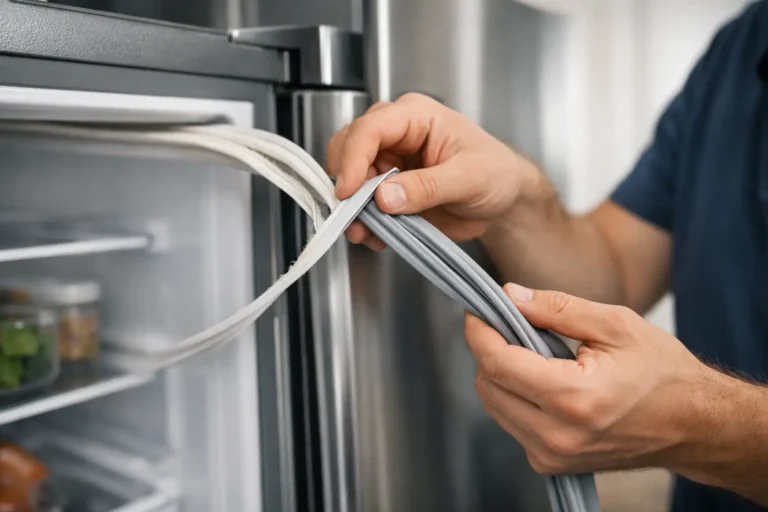
Also inspect the rubber door seal, particularly around its lower edge, where small items often collect. Remove only objects you can clearly see and reach without force. Do not use sharp tools or attempt to prise apart the drum. Damage to the seal can lead to leaks, and forcing a trapped item further in can turn a simple retrieval into a larger repair.
The drain pump filter can also hold coins, buttons and debris. If your model has an accessible filter, place towels and a shallow tray down first, as residual water may drain out. Isolate the power before opening it, follow the manufacturer’s instructions and refit the filter securely. A loose filter cap can cause a leak.
What different washing machine noises can mean
A regular banging during spin is commonly caused by an unbalanced load or an appliance that is not level. If levelling and load adjustment solve it, there may be no fault at all. If the banging continues with ordinary mixed loads, the suspension system or counterweights may need inspection.
A low rumbling, roaring or aeroplane-like sound that gets louder as spin speed increases is often associated with worn drum bearings. You may also find the drum has excessive play: with the machine off, lift the inner drum gently from the door opening. A little movement can be normal, but a noticeable clunk or drop is a warning sign. Bearing repairs require substantial dismantling and should be assessed by an experienced appliance engineer.
Grinding, scraping or a metallic tick while the drum turns may mean a foreign object is trapped, but it can also point to a damaged drum spider or bearing. Continuing to use the machine risks scoring the drum, tearing garments or damaging the outer tub.
A squeal when the drum starts or spins may come from a worn drive belt, pulley or motor-related component. On some machines, a belt can be replaced economically. On others, the cause may be less accessible, so an accurate diagnosis matters before parts are ordered.
Rattling from the rear of the machine can be as simple as a loose hose knocking against the cabinet. Check that inlet and drain hoses are not trapped, kinked or striking the wall during vibration. Do not tighten or alter internal components through the back panel unless you are qualified to do so.
When noise means stop using the washer
There is a difference between an irritating vibration and a fault that could cause further damage. Stop using the machine and arrange repair if it makes a harsh grinding noise, repeatedly walks across the floor, trips the electrics, leaks, emits a burning smell or fails to spin properly. The same applies if the drum feels loose, catches as it turns or leaves marks on clothing.
It can be tempting to keep washing until a convenient time, especially in a busy household. However, a failing bearing or broken suspension component can cause collateral damage to the drum, tub, heater or motor. Acting early may keep the repair more straightforward and reduce the chance of a complete breakdown.
Repair or replace: make the decision with the fault, not the noise
Noise alone does not tell you whether replacement is necessary. A machine that is only a few years old may need a simple levelling adjustment, pump clean-out, belt or shock absorber. These repairs can make clear financial sense, particularly for quality Bosch, Miele, Samsung, Siemens, Neff or LG appliances.
The decision becomes less clear with an older machine that has failed bearings, a damaged drum assembly or several separate problems. Consider its age, previous repairs, energy use and the quoted repair cost. A proper diagnosis should explain the fault in plain English, identify the parts required and give you a clear price before work begins. Avoid authorising vague work based on “it might be this”.
For households across West London, CrownTech Appliances provides in-home washing machine diagnosis with fixed-price quotes, DBS-checked engineers and a 12-month written parts and labour warranty on completed repairs. If a repair is not viable, you should be told clearly rather than paying for work that does not offer sensible value.
Keep the next wash quieter
Once the immediate issue is resolved, small habits help prevent repeat noise. Check pockets, zip up garments with hard fittings where practical, avoid washing a single heavy item alone and leave enough clearance around the appliance for hoses and vibration. Cleaning the pump filter at intervals recommended by your manufacturer can prevent debris building up where it should not.
Most importantly, trust a new sound. Washing machines rarely become loudly noisy without a reason, and the quickest route to a quieter laundry room is usually a precise diagnosis before the fault has time to spread.