A Gaggenau appliance is built to perform at a high level, but that does not make every fault a manufacturer-only job. If you are asking who repairs Gaggenau appliances, the right answer depends on the appliance, the fault, its age and whether it remains under warranty. What matters most is booking an engineer with the right technical capability, a clear process for sourcing parts and a written guarantee for the work.
For a built-in oven that will not heat, a dishwasher displaying an error code or a fridge freezer losing temperature, delays can quickly disrupt a busy household. The aim is not simply to find the first available repairer. It is to choose a service that diagnoses the problem properly and gives you a straightforward repair decision.
Who repairs Gaggenau appliances?
Gaggenau appliances can be repaired by the manufacturer’s authorised service network and, for many out-of-warranty faults, by experienced independent domestic appliance engineers. There is a meaningful difference between the two, so it is worth choosing based on your circumstances rather than assuming one option is always better.
An authorised service partner is usually the sensible first call for an appliance still covered by a manufacturer warranty, a service plan or a recent installation warranty. They have direct access to manufacturer technical information and approved parts channels. Their work may also be required to protect the terms of your existing cover.
A qualified independent engineer can be an excellent option once the appliance is out of warranty, particularly where you need a prompt home visit and a transparent quote. A capable repair company should confirm the exact model before booking, establish whether parts can be obtained and explain any limitations before work begins. This is particularly relevant with premium built-in appliances, where model variants and installation arrangements can affect the repair.
The important distinction is expertise, not the label alone. Ask whether the engineer works on your specific appliance type and whether they can obtain genuine or manufacturer-approved parts where appropriate.
Why Gaggenau repairs need careful diagnosis
Gaggenau appliances are often integrated into bespoke kitchens, and many have sophisticated controls, sensors and electronic components. A fault that appears simple can have several possible causes. For example, an oven that is not reaching temperature may have a failed heating element, temperature sensor, safety thermostat, relay or control board issue. Replacing a part without proper testing is an expensive way to guess.
The same applies to refrigeration. A fridge that is warm may be affected by airflow, a faulty fan, a defrost issue, a sensor fault, a compressor problem or a sealed-system leak. Work on refrigeration circuits should be handled by an appropriately certified engineer. If cooling performance has changed, protect food safety first: keep doors closed, move perishable food to another appliance where possible and arrange an assessment without delay.
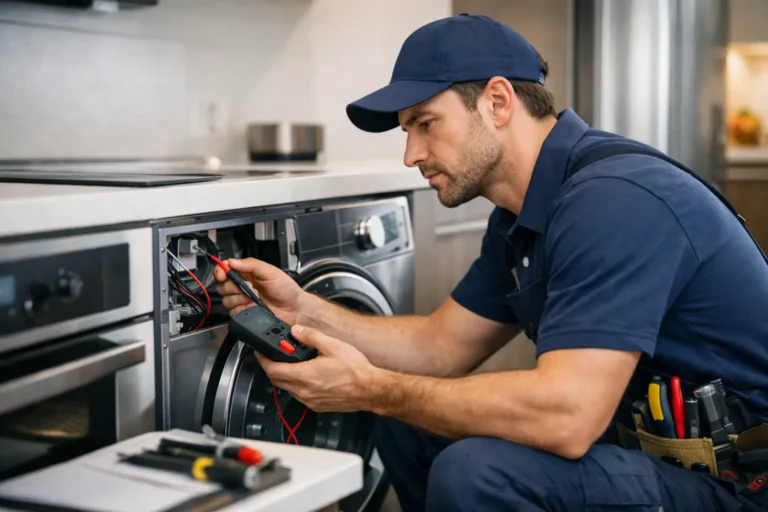
For induction hobs and built-in coffee machines, access and safe isolation are equally important. An engineer should check the appliance’s fault history, visible condition, power supply and installation before proposing a repair. That approach takes a little more care at the beginning, but it reduces the risk of unnecessary parts and repeat visits.
When to choose authorised service and when to use a local engineer
Start by checking your paperwork. If the appliance is within its warranty period, contact the retailer or manufacturer before arranging an independent repair. Unauthorised work could affect a valid claim, even if the original issue appears minor.
If the warranty has ended, consider the urgency, the appliance type and the practicality of the repair. An authorised route may suit you if a specialist part or manufacturer software support is likely to be needed. A local repair company may be the more practical choice where a qualified engineer can attend sooner, diagnose the fault at home and provide a clear fixed-price repair option.
For households across West London, speed is often decisive. A failed dishwasher before a family weekend or an oven fault ahead of a planned dinner does not always allow for a lengthy appointment window. However, fast service should not mean vague pricing or pressure to proceed. You should know what the visit covers, whether labour and parts are included in the quote, and what warranty applies once the repair is completed.
Questions to ask before booking a Gaggenau repair
A professional repair company should welcome sensible questions. Before confirming an appointment, provide the full model number if you can find it. On built-in appliances, this is commonly located around the door frame, inside the appliance or on a rating plate. The model number allows the engineer to check compatibility and likely parts availability.
Ask whether the company repairs that appliance category, whether it can source the required parts and whether the engineer will diagnose before replacing components. It is also reasonable to ask about the arrival window, call-out charge, quote process and warranty on both parts and labour.
Four details are especially valuable when comparing repair services:
- Whether the engineer is qualified for the appliance type, including F-Gas certification for refrigeration work.
- Whether pricing is explained before repairs begin, with no hidden extras.
- Whether replacement parts are genuine, manufacturer-approved or clearly identified alternatives.
- Whether the completed repair comes with a written parts and labour warranty.
Do not overlook practical access. Tell the repairer if the appliance is integrated, stacked, unusually heavy or located in a tight utility space. A clear description helps the engineer arrive prepared and avoids wasted time on the day.
Repair or replace: making the sensible choice
Premium appliances are often worth repairing, but not automatically. The decision should be based on the fault, age, condition and repair cost rather than the badge on the door. A replaceable heating element, pump, door seal, fan motor or sensor may offer good value, especially if the appliance has otherwise performed reliably.
The calculation changes if several costly components have failed, parts are no longer available or the appliance has repeated breakdowns. With older refrigeration equipment, energy use and the condition of the sealed cooling system may also influence the decision. An honest engineer should set out the options rather than treating every diagnosis as a repair sale.
There is also the question of kitchen integration. Replacing a Gaggenau built-in appliance can involve more than buying a new unit. Cabinet dimensions, ventilation requirements, electrical connections, door furniture and matching finishes may all add cost and complication. That can make a well-priced repair the more sensible route, provided the appliance has a reasonable prospect of reliable service afterwards.
What a dependable repair visit should look like
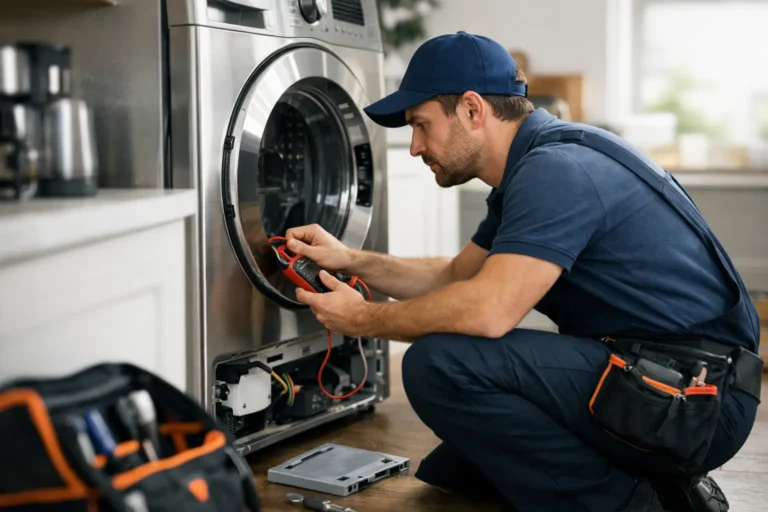
A good repair experience is organised from the first contact. You should receive a clear appointment arrangement rather than an open-ended wait, and the engineer should arrive ready to inspect the appliance safely. The visit should begin with questions about the symptoms, error codes, recent changes and previous repairs.
After diagnosis, the engineer should explain the likely cause in plain English. If a repair can be completed there and then, you should receive confirmation of the cost before work proceeds. If a part must be ordered, you should understand the expected next step rather than being left chasing updates.
At CrownTech Appliances, the focus is on the service details that make a repair less stressful: certified, DBS-checked engineers, clear fixed-price quotes, a 90-minute arrival window, no-fix-no-fee protection and a 12-month written parts and labour warranty. For any Gaggenau booking, it remains sensible to confirm the exact model and fault with the team first, so the right engineer and parts route can be assessed.
If your appliance is leaking, tripping the electrics, producing a burning smell or failing to cool safely, switch it off where safe to do so and arrange professional help. For less urgent faults, keep the model number and any error code to hand. That small amount of preparation gives the repairer the best chance of giving you a clear answer and getting your kitchen back to normal without unnecessary delay.