When a Siemens appliance stops working, the problem is rarely just the machine itself. It is the washing left piling up, the fridge contents at risk, or the oven that fails an hour before dinner. That is why siemens appliance repair is usually less about theory and more about getting a clear answer quickly – what has failed, whether it is worth fixing, and how soon normal life can get back on track.
Siemens appliances are generally well built, but that does not make them fault-proof. Like any premium domestic appliance, they rely on a mix of electronics, sensors, motors, pumps, valves and control boards. Over time, wear, heat, moisture and power fluctuations all take their toll. The result may look simple from the outside – a dishwasher not draining, a washing machine stuck mid-cycle, or an induction hob showing an error code – but the cause can vary widely.
When Siemens appliance repair makes sense
For most households, the first question is not how a fault works. It is whether repair is the sensible option. In many cases, it is. Siemens machines are often designed with a serviceable lifespan that makes professional repair worthwhile, particularly when the fault is isolated to a replaceable component rather than widespread internal wear.
Age matters, but so does type of appliance. A relatively modern Siemens washing machine, dishwasher, oven or fridge freezer is often worth repairing if the cabinet, drum, seals and core structure are still in good condition. A failed pump, heater, door lock, fan motor, thermostat or sensor is usually a practical repair. On the other hand, if an older appliance has multiple faults, heavy corrosion, repeated electrical issues or poor parts availability, replacement may be the better call.
The honest answer is that it depends on the diagnosis. A reliable engineer should tell you where the line is. That means explaining the fault clearly, quoting a fixed repair cost where possible, and not pushing a repair that makes little financial sense.
Common Siemens faults by appliance
Siemens washing machines
The most common issues tend to involve drainage, spinning, door locks, heating and electronic control faults. A machine that fills but does not wash properly may have a heater or sensor problem. One that will not drain could be dealing with a blocked filter, a faulty pump or a restriction deeper in the waste system. If it refuses to start at all, the issue may be the door interlock, control module or power supply path.
Some faults appear intermittent, which is where experience matters. A machine that works one day and fails the next can still have a clear underlying cause, but it needs proper testing rather than guesswork.
Siemens dishwashers
Dishwashers often show up with drainage faults, poor cleaning performance, water intake errors or circulation pump problems. Sometimes the machine is technically running, but not properly heating or distributing water, which leaves glasses cloudy and plates dirty. In other cases, a leak detection trigger may stop the appliance from completing any cycle at all.
Dishwasher repairs can be straightforward, but only when the diagnosis is accurate. Replacing parts one by one without confirming the root issue is where costs can start to climb unnecessarily.
Siemens fridge freezers and cooling appliances
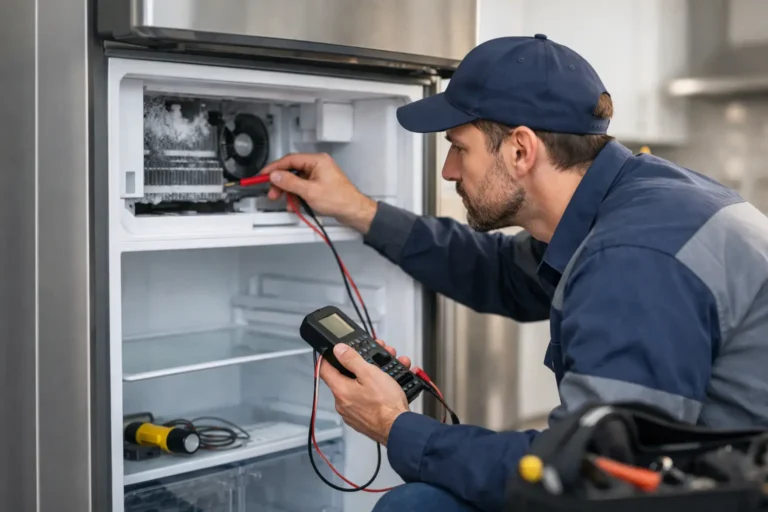
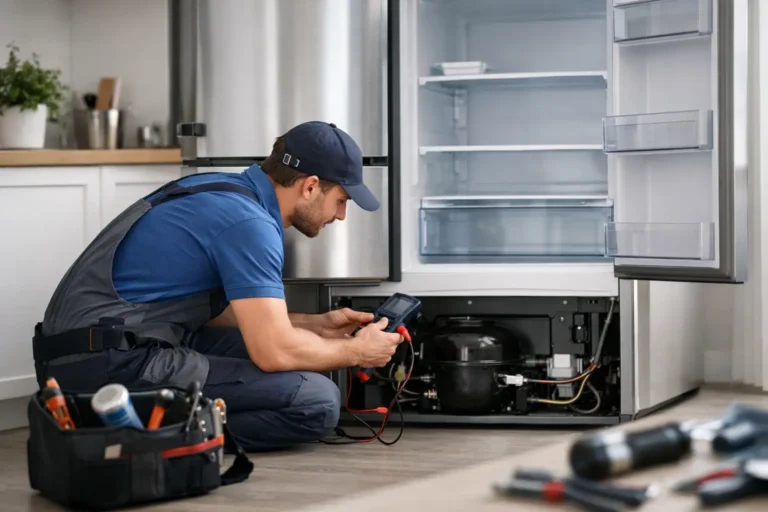
Cooling faults need quicker attention because food safety is part of the picture. If a Siemens fridge freezer is warm, over-freezing, making unusual noises or showing temperature instability, the problem could involve the thermostat, fan system, defrost circuit, sensor array or sealed cooling components. Not every engineer is qualified to work on refrigeration systems, so for certain faults, certification matters.
If the appliance is still cooling partially, it is tempting to leave it for a few days. That can be a mistake. A minor cooling issue often becomes a full breakdown, and partial cooling can mask a larger problem developing in the background.
Siemens ovens, hobs and cooking appliances
Electric ovens commonly develop faults with heating elements, thermostats, selector switches, fans and control boards. If an oven is heating unevenly, taking too long to reach temperature or tripping the electrics, it needs proper testing rather than assumptions. Induction hobs can be more complex, especially where power modules or touch controls are involved.
With cooking appliances, safety is just as important as convenience. An oven that cuts out unexpectedly or a hob that does not respond consistently should not be ignored.
What a proper Siemens appliance repair service should include
A good repair service should reduce uncertainty, not add to it. That starts with arrival times. If you are waiting all day with no clear slot, the service is already creating friction. For busy households, a guaranteed arrival window is not a luxury – it is basic professionalism.
The next issue is pricing. Many customers are less worried about paying for a proper repair than they are about hidden extras appearing halfway through the job. A transparent service should explain the call-out, diagnosis and repair cost structure in plain terms. If extra parts are needed, that should be discussed before work continues.
It also matters who is entering your home. Certified, DBS-checked engineers, genuine replacement parts where appropriate, and a written parts and labour warranty all signal that the company expects its repairs to last. That is especially relevant with Siemens appliances, where brand familiarity helps avoid misdiagnosis.
Why brand-specific experience matters
Not every domestic appliance engineer approaches Siemens faults in the same way. On paper, many machines share similar symptoms. In practice, different brands have different layouts, fault histories, software behaviours and common failure points.
That brand-specific knowledge saves time. An experienced Siemens engineer is more likely to recognise whether an error pattern points towards a pump issue, a control board fault or a sensor problem before dismantling half the appliance. It also reduces the risk of replacing a part that was never the real cause.
For customers, that usually means a faster repair path and a lower chance of repeat visits. It is one reason many households in West London choose specialist repair companies over general handymen or one-person services with limited diagnostic equipment.
Repair or replace? The real decision points
People often assume that a premium appliance is always worth repairing. That is not always true. Equally, replacing a Siemens appliance at the first sign of trouble is often more expensive than it needs to be.
The sensible decision usually comes down to five factors: age, condition, fault type, repair cost and replacement value. If the appliance is mid-life, otherwise in strong condition and the repair cost is proportionate, repair is usually the practical route. If it is reaching the end of its service life and showing signs of wider deterioration, replacement may be more economical.
There is also the issue of convenience. Replacing an integrated dishwasher or built-in oven is not the same as swapping a kettle. Measurements, fitting and delivery delays all add time and cost. A same-day repair can often solve the immediate problem with far less disruption.
What to do before you book a Siemens appliance repair
A few checks can help, as long as they do not involve taking the machine apart. Confirm the power supply, inspect for obvious blockages, note any error codes and pay attention to when the fault occurs. Does the appliance fail at the start of a cycle, halfway through, or only under heat? Those details can speed up diagnosis.
What you should avoid is repeated restarting, forcing doors, or trying internet fixes that involve electrical components. That often turns a single fault into two. If there is a burning smell, tripping electrics, water leakage or a complete loss of cooling, it is best to stop using the appliance and book a professional visit.
For households that need a fast, low-risk solution, the right repair company should make the process simple: quick booking, a clear arrival window, a firm diagnosis, fixed pricing and a written guarantee. That is the standard CrownTech Appliances builds around, because when a Siemens machine fails, reassurance is not just about technical skill. It is about knowing the job will be handled properly from first call to final test.
A broken appliance always feels urgent because it interrupts the routine that keeps a home moving. The right repair is the one that restores that routine quickly, safely and without guesswork.