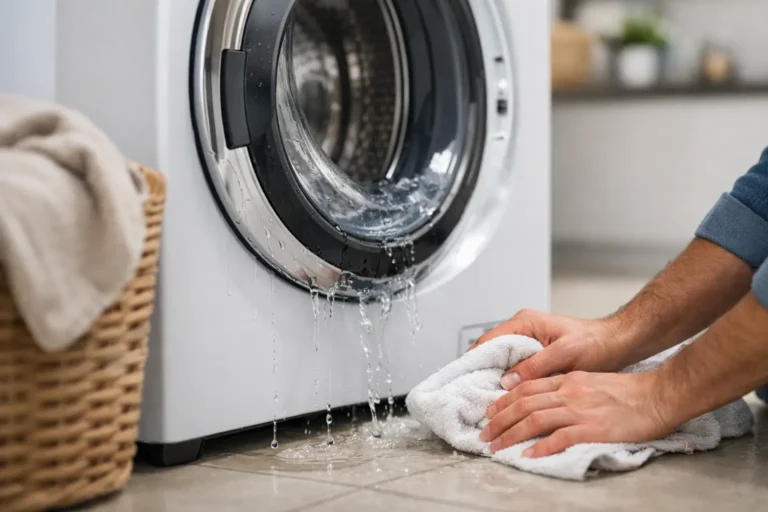
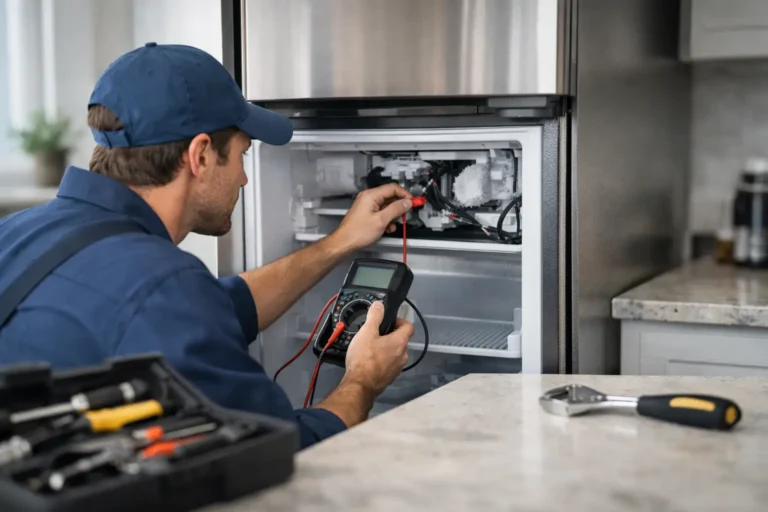
A washing machine that will not drain or a fridge freezer that has stopped cooling creates pressure to book the first available engineer. Repair company ratings can make that decision safer, but only when you look beyond the headline star score. A five-star average is useful. It is not, on its own, proof that a company will arrive when promised, diagnose the fault accurately or honour its warranty.
For a household in West London, the most valuable reviews answer practical questions: Did the engineer turn up within the agreed window? Was the price explained before work began? Was the appliance fixed properly? And, if a return visit was needed, did the company take responsibility?
Start with the pattern, not the average
A rating is a summary of many different experiences. Two businesses can both show 4.8 stars while offering very different levels of service. One may have built that score through recent, detailed feedback from appliance repair customers; the other may have a small number of older reviews that say little more than “great service”.
Look at both the volume and the timing. A consistent stream of recent reviews is generally more meaningful than a high score based on a handful of ratings from several years ago. Appliance repair is operational work. Staffing, parts availability, booking systems and service standards can change, so last month’s experience often tells you more than one from 2021.
The score also needs context. A company with hundreds of reviews and a 4.7 average may be a more established choice than one with six perfect ratings. No local repair business can control every outcome, particularly where an appliance is old, parts are discontinued or a manufacturer defect requires more than one visit. What matters is whether customers consistently describe a clear, professional process.
Read reviews for the details that affect your booking
Useful reviews contain specifics. They may mention the appliance type, the fault, the engineer’s punctuality, whether a fixed quote was honoured, and how the home was treated. These details are harder to dismiss as vague praise and more relevant to the service you need.
If your dishwasher is leaking, seek out reviews from customers with similar issues. If an American-style fridge is not holding temperature, look for evidence that the company handles refrigeration work and understands the extra requirements involved. A positive review for fitting a new oven does not necessarily demonstrate expertise in diagnosing a complex cooling fault.
Pay attention to language around communication. Phrases such as “called before arrival”, “explained the fault clearly”, “quoted before replacing the part” and “returned with the correct component” point to an organised repair process. For busy households, reliability is not a bonus. It is part of the repair.
Check whether repair company ratings match the company’s promises
Reviews should support a company’s published service standards, not substitute for them. Before booking, compare what customers report with the practical commitments being offered.
A credible appliance repair company should be clear about appointment windows, diagnostic charges, labour, parts, and what happens if the appliance cannot be repaired. If a business advertises a no-fix-no-fee policy or a written parts and labour warranty, reviews may show whether customers found those promises straightforward in practice.
The same applies to technical credentials. Work on fridge freezers and American-style refrigeration appliances can require F-Gas certification. Engineers entering occupied homes should be appropriately checked, and a company should be able to explain its approach to genuine or approved replacement parts. These are not decorative badges. They reduce risk when someone is working on an expensive appliance in your kitchen or utility room.
Do not assume the cheapest review-backed option is the best value. A low initial call-out price can become costly if labour, parts, parking or return visits are unclear. Equally, the highest quote is not automatically better. The sensible choice is usually the company that gives a defined price structure, explains the likely next step and backs completed work with a written guarantee.
Treat negative reviews as a service test
Every established company will receive an occasional poor review. Appliances can fail again, parts can arrive late, and a customer may understandably be frustrated when a repair is not economical. The key question is how the business responds.
Read negative feedback with a practical eye. Is the complaint about a problem no one could reasonably avoid, such as a discontinued control board? Or is it about missed appointments, surprise charges, unanswered calls or an unresolved fault? Repeated complaints in the same area deserve attention, even if the overall rating remains high.
A professional response should be calm, specific and respectful. It should not disclose personal information or argue with the customer. Where appropriate, it should explain what was done to resolve the issue. A company that acknowledges a service failure and offers a clear route to put it right often gives a more reassuring signal than one that only displays flawless praise.
There is a balance here. One angry review should not outweigh dozens of detailed positive experiences. But neither should a strong average make you ignore repeated concerns about punctuality, pricing or warranty support. Ratings are evidence, not a verdict.
Look for signs that reviews are genuine and relevant
Most customers can spot a review that feels copied, rushed or overly promotional. Genuine feedback tends to vary in length, wording and level of detail. It may name an appliance brand, describe a fault in ordinary terms, or mention a small aspect of the visit that a generic review would miss.
Be cautious if every review uses identical phrases, appears within a very short period, or praises services that do not match the company’s stated work. That does not prove anything by itself, but it is a reason to look further.
It is also worth checking whether the review source verifies that the reviewer used the service. Different platforms use different methods, so no system is perfect. The strongest reassurance comes from consistency across a company’s reviews, trading information and customer-facing policies.
For landlords and property managers, relevance matters even more. A positive review should indicate whether the company can coordinate access, provide clear invoices, communicate with tenants and complete work within an agreed timeframe. A repair that is technically sound but poorly managed can still create avoidable disruption.
Ask three questions before you book
Once the ratings have narrowed your options, a short phone call or online enquiry can reveal whether the service is right for your situation. Ask whether the company can attend within a defined arrival window, whether the engineer is qualified for your appliance type and brand, and how the quote will be confirmed before repairs go ahead.
You should also ask about the warranty in plain terms. Does it cover both the fitted part and the labour? How long does it last? What should you do if the same fault returns? A proper answer should be direct, not hidden behind vague wording.
For an older appliance, ask whether the engineer will advise honestly on repair versus replacement. The right decision depends on the appliance’s age, condition, fault, expected parts cost and the price of a comparable replacement. A trustworthy engineer will not pressure you into a repair that makes little financial sense, but should give you enough information to decide.
Use ratings to reduce risk, not to delay action
When an oven has failed before a family meal or a fridge is warming up with food inside, there is little value in spending hours comparing every review. Set a sensible threshold: recent, detailed feedback; clear pricing; relevant technical capability; a defined arrival window; and a written warranty. Then book the company that meets it.
At CrownTech Appliances, that means pairing review-backed service with certified engineers, fixed-price quotes, a 90-minute arrival window and a 12-month written parts and labour warranty. The aim is not simply to earn a good rating. It is to make the experience behind that rating dependable when your household needs a repair quickly.
A star score can point you in the right direction, but the details tell you whether a repair company is prepared to stand behind its work. Choose the provider whose reviews, promises and answers all say the same thing.