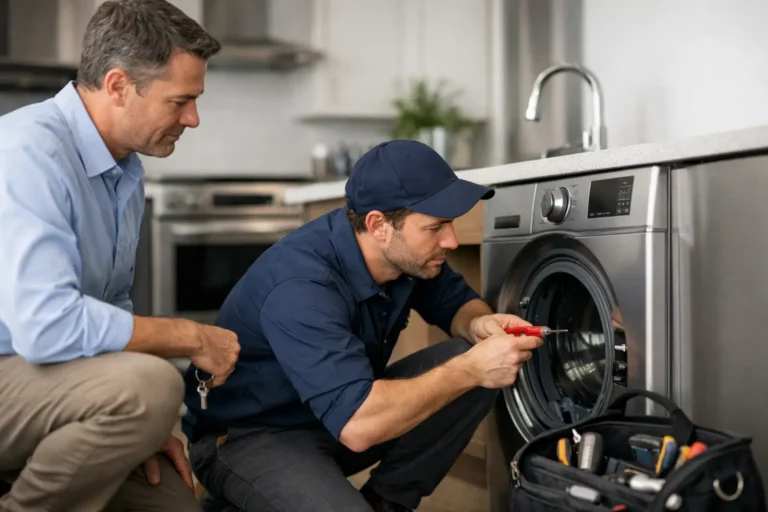
A washing machine not draining is rarely a problem to ignore until the weekend. A drum full of grey water can leave clothes trapped, disrupt a busy household and, if the machine is forced through more cycles, risk a leak. Some causes are straightforward to check safely. Others need a qualified engineer before a small blockage becomes a damaged pump or flooded floor.
First, stop the cycle safely
If water is still sitting in the drum, switch the appliance off at the mains and unplug it before touching the filter, drain hose or anything behind the machine. Do not keep restarting the programme in the hope that it will clear itself. Repeated drain attempts can overwork a struggling pump.
Avoid opening the door while the drum is full. Most modern machines keep it locked for good reason. If you need the laundry urgently, check the handbook for the model’s emergency-drain instructions. If the machine is built into a kitchen unit, leave moving it to a professional unless you can do so without straining hoses, damaging flooring or trapping the power cable.
Why is my washing machine not draining?
The appliance drains by sending water from the tub through a filter and pump, then along the drain hose into the waste pipe. A restriction or fault anywhere in that route can stop the process. The point at which the machine stops gives a useful clue.
If it washes normally but stops before spinning, the machine may be unable to empty the water. If it makes a low humming sound during draining, the pump could be blocked or seized. If it is silent when it should drain, there may be an electrical fault, wiring issue or failed pump. Water appearing under the machine can point to a loose hose, damaged pump housing or blocked plumbing forcing water back out.
An error code can help, but it is not a full diagnosis. Codes vary by brand and often tell you only that the appliance has detected a drainage problem, not whether the filter, hose, pump or household waste pipe is responsible.
A blocked pump filter
Coins, hair grips, lint, buttons, tissues and small items left in pockets commonly collect in the pump filter. This is one of the most frequent reasons a washing machine will not drain properly, particularly in homes with children or pets.
On many front-loading models, the filter sits behind a small panel near the bottom front of the machine. Put down towels and use a shallow tray before opening it, as water will usually escape. Some machines have a small emergency drain tube beside the filter. Drain that slowly first if available, then remove the filter carefully and clear visible debris.
Check the filter cap and seal before refitting it. Cross-threading or leaving it loose can cause a leak on the next wash. If the filter will not turn, do not force it. A foreign object may be lodged behind it or the component may be damaged.
A kinked or blocked drain hose
A drain hose can become crushed when a machine is pushed back into place, especially in a narrow utility cupboard or fitted kitchen. Pull the appliance forward only if it is safe to do so, then check that the hose is not kinked, flattened or trapped.
The hose must also be fitted at the correct height and not pushed too far down the standpipe. An incorrectly installed hose can cause poor drainage or allow water to siphon back into the drum. If the hose looks clear but water drains slowly from several appliances, the issue may be in the household plumbing rather than the washing machine itself.
A blocked waste pipe
If your washing machine shares a waste connection with a sink, look for clues at the sink too. Slow drainage, gurgling or water backing up when the machine tries to empty suggests a blocked trap or waste pipe. A washing machine repair will not resolve a plumbing obstruction further along the line.
This distinction matters because it prevents paying for the wrong call-out. An experienced engineer can identify whether the fault sits inside the appliance or in the external drainage setup, but a plumber may be the right next step where the waste pipe is blocked.
A faulty drain pump
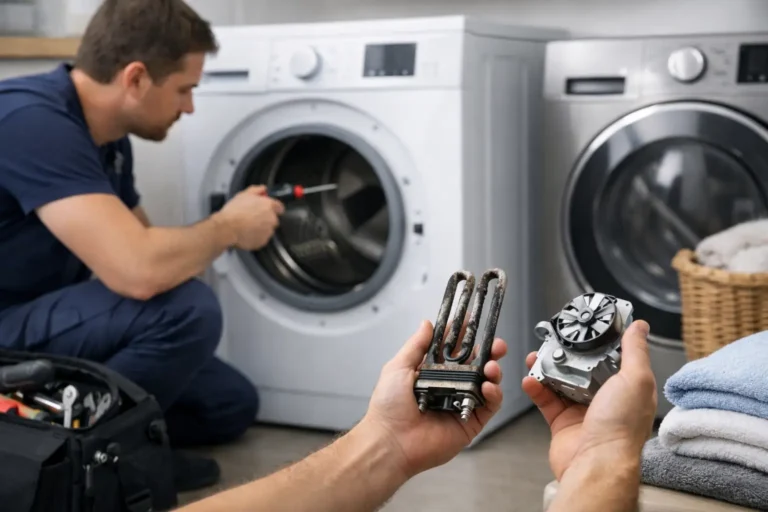
The drain pump does the physical work of emptying the drum. It can fail because its impeller is jammed, its motor has worn out, or water has reached an electrical connection. A pump may hum without moving water, run intermittently or make a grinding noise.
Replacing a pump is not usually a sensible DIY job. Access often requires removing panels and working around sharp edges, wiring and residual water. The correct replacement also depends on the machine’s exact model number. Fitting an unsuitable part can create further faults or invalidate a parts warranty.
Too much detergent or an unbalanced load
Overdosing detergent can create excess foam, particularly with concentrated products or soft water. The machine may struggle to sense the correct water level or complete the drain and spin sequence. Run an empty rinse programme after the water has been safely removed, then use less detergent on future loads.
A single heavy item, such as a bath mat or duvet, can also leave the load unbalanced. Many machines will pause or refuse to spin when they cannot distribute the weight safely. This is different from a true drainage fault, although the drum may still retain some water. Once drained, redistribute the load and wash bulky items according to the care label.
Safe checks you can make before booking a repair
Start with the simple checks: turn off and unplug the machine, inspect the drain hose for a visible kink, and clean the pump filter if your handbook shows that this is user-accessible. Check the sink or standpipe for obvious slow drainage. Then try a drain or spin programme only after everything has been refitted securely.
Do not dismantle the pump, tip a heavy washing machine onto its side, bypass the door lock or use chemical drain cleaner inside the appliance. Chemical products can damage seals and hoses, while forcing parts can turn a repairable blockage into a more expensive fault.
Take note of the make and model, any displayed error code, when the problem began, and whether the machine makes a noise while attempting to drain. Those details make a professional diagnosis quicker and help ensure the engineer arrives with the right likely parts.
When a drainage fault needs an engineer
Book a repair promptly if the filter is clear but the machine still will not empty, if there is a burning smell, repeated tripping at the consumer unit, a grinding pump noise or water leaking onto the floor. These signs can indicate a failed component rather than a routine blockage.
It is also sensible to call for help where a machine is integrated, very heavy, under warranty or connected in a way that is difficult to access. Landlords and property managers should act quickly too: standing water can damage kitchen cabinets, laminate flooring and neighbouring properties in a flat.
For households in West London, CrownTech Appliances provides in-home diagnosis with certified, DBS-checked engineers, fixed-price quotes and a no-fix-no-fee policy. Where a repair is approved, parts and labour are covered by a 12-month written warranty. That clarity is particularly useful when deciding whether an older appliance is worth repairing or replacing.
Prevent another drainage problem
Small habits make a real difference. Empty pockets before every wash, use the detergent dose recommended for your water hardness and load size, and clean the pump filter at intervals set out in the handbook. Washing small items such as baby socks or bra pads in a mesh bag also reduces the chance of objects reaching the pump.
Leave the door and detergent drawer slightly open after a wash where practical. It helps moisture evaporate and makes it easier to spot detergent build-up before it affects performance. If you notice slower draining or an occasional pump noise, arrange a check early rather than waiting for the machine to stop mid-load.
A full drum does not always mean a major breakdown, but it does deserve a measured response. Make the safe checks, protect your floor, and get a proper diagnosis when the fault is not immediately clear.