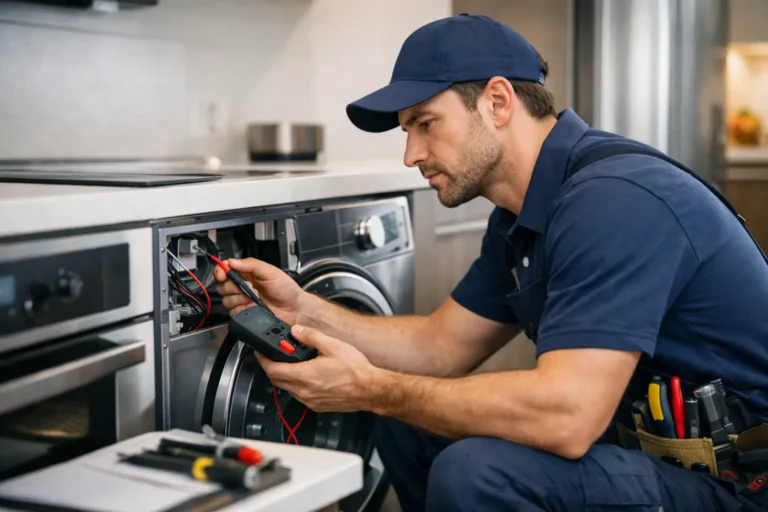
A warm fridge and a frosted-up freezer usually show up at the worst possible moment – after the weekly shop, before guests arrive, or just as the milk starts turning. This fridge freezer repair guide is built for that situation: practical checks you can do safely, clear signs of what the fault may be, and a realistic view of when a professional repair is the smarter choice.
Fridge freezers often give early warning signs before they fail completely. You might hear a fan running constantly, notice water collecting under the salad drawers, or find the freezer working while the fridge section goes warm. Those details matter, because they point to very different faults. A poor seal, a blocked drain and a failed fan motor can all look similar at first, but the repair path is not the same.
Fridge freezer repair guide for the most common faults
Before assuming the appliance has reached the end of its life, start with the basics. Check that the plug is firmly in place, the socket is working and the temperature settings have not been knocked. It sounds obvious, but accidental thermostat changes and tripped electrics are common, especially in busy family kitchens or rental properties.
Next, look at airflow. A fridge freezer needs space around it to release heat properly. If it has been pushed tightly into a cupboard gap or loaded with shopping so densely that cold air cannot circulate, cooling performance drops. That does not always mean a component has failed. Sometimes the fix is simply to restore ventilation and allow the appliance several hours to stabilise.
Door seals deserve a close look too. If the gasket is split, loose or dirty, warm air enters the cabinet and forces the compressor to work harder. The result can be excess frost, poor temperature control and rising energy use. A worn seal is usually straightforward to identify, but not every model makes replacement simple. On some integrated or premium units, the door liner design can make seal replacement more involved than people expect.
If the appliance is running but not cooling properly, condenser coils may be part of the problem. On models where the coils are accessible, dust build-up restricts heat release and affects efficiency. A careful clean can help, but only if done safely and only on areas intended to be user-accessible. If you are dealing with a built-in appliance, exposed wiring, or any signs of overheating, stop there.
When the fridge is warm but the freezer still works
This is one of the most common call-outs because it feels confusing. People assume that if the freezer is cold, the whole appliance must be fine. In many fridge freezers, though, cold air is produced in one section and then moved around by fans and dampers. If the fan fails or an air channel gets iced over, the freezer may stay cold while the fridge compartment warms up.
A full defrost can sometimes resolve an ice blockage. That means switching the appliance off, emptying it, protecting the floor from water and leaving the doors open long enough for hidden ice to melt completely. A quick one-hour defrost is rarely enough. In some cases, 24 hours is needed. If normal cooling returns only briefly and then the fault comes back, there is likely an underlying issue such as a faulty defrost heater, sensor or control board.
This is where DIY repair often stops being cost-effective. Repeated defrosting may buy time, but it does not fix the cause. If you are a landlord managing a tenancy or a household relying on the appliance every day, temporary workarounds can quickly become more disruptive than booking a proper diagnosis.
Water leaks, ice build-up and strange noises
Water inside the fridge section usually points to a blocked defrost drain, especially if it gathers under drawers or runs onto the kitchen floor. Food debris, packaging fragments and general residue can block the drainage channel and send condensation the wrong way. Clearing an accessible drain carefully may solve it.
If the leak is coming from behind the appliance, the situation changes. It could still be harmless condensation, but it may also indicate a drainage problem, a damaged water line on certain models, or excessive icing around components. The location of the leak matters. So does whether the appliance is still holding temperature.
Ice build-up around the back panel or vents is another common sign. A light layer of frost is not unusual in some circumstances, but thick, recurring ice points to a defrost system issue or warm air entering through a compromised seal. If shelves and food packaging are sticking to ice, the appliance needs more than routine cleaning.
Noises need context. A low hum, occasional clicking and brief gurgling sounds can be entirely normal. Loud buzzing, repeated clicking without the compressor starting, grinding from the fan area, or sudden changes in sound are different. They suggest mechanical or electrical faults, and those faults tend to get worse rather than improve.
What you can safely check before calling an engineer
A sensible fridge freezer repair guide should save you from unnecessary appointments, not push you into taking risks. Safe checks are limited but useful. Confirm the appliance has power, inspect the door seals, clean accessible vents, reduce overpacking and make sure temperature settings are appropriate. If there is heavy ice, carry out a full defrost once and monitor the result.
You can also check room conditions. Appliances placed in very cold outbuildings or overheated utility spaces can behave unpredictably depending on their climate rating. That is especially relevant in garages, extensions and poorly ventilated fitted kitchens.
What you should not do is remove rear covers, tamper with sealed refrigeration components, or attempt gas-related work. Fridge freezers use systems that require specialist tools, testing procedures and, in many cases, F-Gas certification. Guesswork here is not just ineffective – it can be unsafe and can turn a repairable fault into a more expensive one.
When a repair makes sense and when replacement is better
Not every fault justifies repair, and honest advice matters more than a sales pitch. If the appliance is relatively modern, from a quality brand, and the fault is isolated to a fan, thermostat, sensor, seal or drain issue, repair is often the better value option. It restores service quickly and avoids the cost and inconvenience of replacing a fitted unit.
If the compressor has failed on an older appliance, or if multiple components are worn and parts are difficult to source, replacement may be the more sensible route. Integrated fridge freezers complicate the decision because replacing them usually involves more labour, possible carpentry adjustments and longer downtime. A repair that looks expensive in isolation can still be cheaper than a full replacement once installation costs are factored in.
Brand and model also matter. Premium appliances from Bosch, Miele, Siemens, Samsung, LG and similar manufacturers are often worth repairing if the cabinet condition is sound and the issue is correctly diagnosed. Cheap units near the end of their expected lifespan are a different calculation.
Why diagnosis matters more than symptom spotting
Online advice can help narrow things down, but symptoms overlap. A warm cabinet could be caused by a thermostat, a sensor, a fan motor, a control board, poor ventilation or a sealed system fault. Water under drawers may be a blocked drain, but it can also be linked to icing patterns caused by another problem. Replacing parts based on a guess is how repair costs spiral.
A proper diagnosis should tell you three things clearly: what has failed, whether it is economically worth fixing, and what the total repair cost will be before work starts. That level of clarity removes the usual uncertainty around appliance repairs. For busy households, that matters just as much as the technical fix.
In practice, the best repair services make this process straightforward. They turn up when they say they will, assess the fault properly, explain the options in plain English and quote a fixed price without hidden extras. If you are dealing with food at risk, a tenant waiting for a solution or an appliance in daily use, speed matters – but speed without proper diagnosis is just delay in disguise.
For households across West London, where missed appointments and vague pricing are common frustrations, reliability is part of the repair itself. CrownTech Appliances approaches fridge freezer faults with that in mind: certified engineers, clear fault diagnosis and repairs backed by a written warranty rather than verbal promises.
A practical approach to your next step
If your fridge freezer has stopped cooling properly, start with the safe checks, give it time to stabilise after any adjustment, and pay attention to the exact pattern of the fault. Is the freezer cold but the fridge warm? Is there water inside, frost around vents, or a new noise that was not there last week? Those details will help separate a simple issue from a fault that needs an engineer.
The best next step is not always the cheapest-looking one. Sometimes a quick reset or defrost sorts it. Sometimes the most cost-effective decision is a same-day repair before food is lost and the fault worsens. The key is acting early, while the appliance is still giving you useful clues.