A washing machine that stops halfway through a load creates a problem far beyond a basket of damp clothes. For families, tenants and landlords, it can quickly disrupt the week. A qualified Richmond washing machine engineer can identify whether the fault is a straightforward repair, a parts issue or a sign that replacement makes better financial sense – without guesswork or open-ended costs.
The right response depends on what the machine is doing, its age and whether there is any risk of leaking or electrical damage. Some faults need prompt attention; others can wait until a convenient appointment. What should not wait is a machine that is leaking, tripping the electrics, smelling of burning or making violent banging noises on spin.
When to call a Richmond washing machine engineer
A washing machine does not need to be completely dead to need professional attention. Small changes in performance often point to a component beginning to fail. Acting early can prevent water damage, protect clothing and avoid a more expensive secondary fault.
Call for a repair if the machine will not drain, will not fill, fails to spin, leaves clothes soaking wet or repeatedly stops with an error code. Unusual grinding, scraping or rumbling can indicate worn bearings, a foreign object in the pump or drum damage. A door that will not unlock is also a common reason for a visit, particularly when laundry is trapped inside.
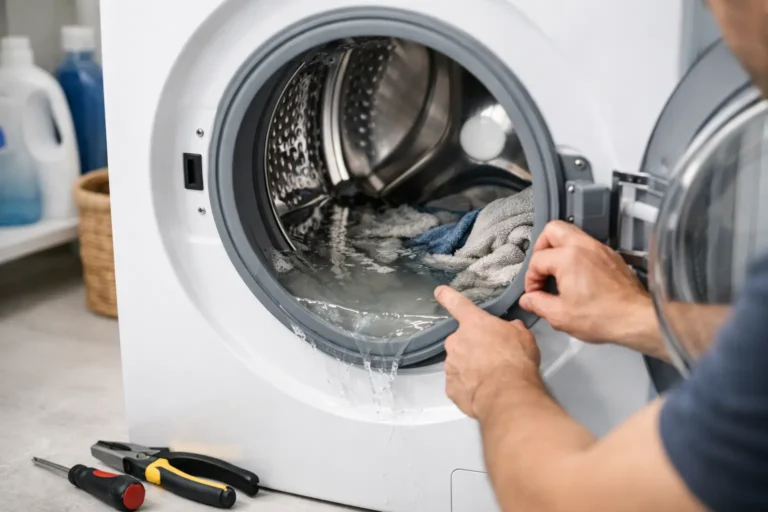
Water beneath the appliance should be treated seriously. It may come from a loose hose, split door seal, faulty pump or internal connection. Turn the machine off, isolate it at the mains if it is safe to do so, and avoid running another cycle until the source has been checked. If water is close to sockets or electrical connections, do not attempt to move the appliance yourself.
A burning smell, smoke, sparks or a machine that trips the consumer unit requires immediate isolation. These symptoms can be linked to a heating element, motor, wiring or control board. They are not faults to investigate with a restart.
Quick checks worth making first
There are a few safe checks that may save time before booking an engineer. Confirm that the appliance has power and that the socket has not been switched off. Check whether the water supply tap behind the machine is open, and make sure the drain hose is not crushed behind the cabinet.
If the machine will not drain, inspect the pump filter only if your instruction manual permits it and you can do so safely. Put down towels first, as retained water is normal. Coins, hair clips, fabric fibres and small items from pockets often collect here. Never force the filter or dismantle panels to reach deeper into the appliance.
An unbalanced load can also stop a spin cycle. Pause the programme, redistribute bulky items such as towels or bedding, then try a spin-only setting once. If the same issue returns with ordinary loads, it is time for a diagnosis rather than repeated resets.
These checks are useful, but they have limits. Modern Bosch, Miele, Samsung, Neff, Siemens and LG machines use sensors and electronic controls that can display similar symptoms for very different underlying reasons. A drain error, for example, may be caused by a blocked filter, a failed pump, a pressure switch or wiring fault. Replacing parts by trial and error is rarely the economical route.
What a proper washing machine diagnosis involves
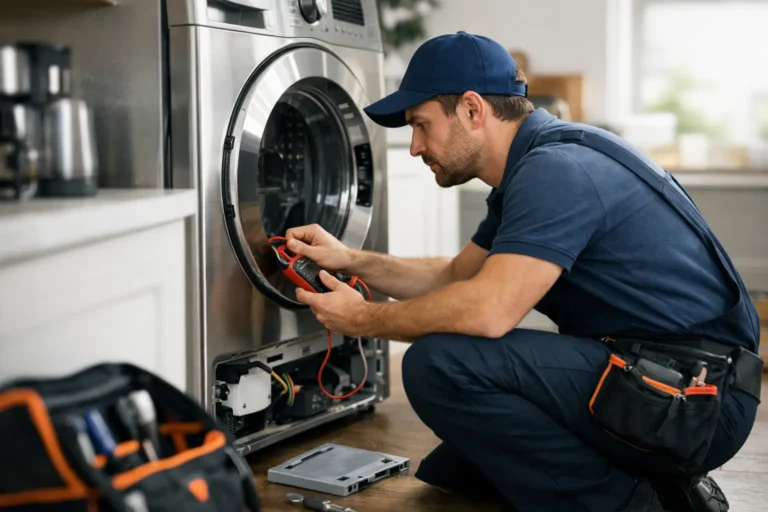
A professional repair should start with evidence, not assumptions. The engineer will assess the reported fault, inspect the machine’s installation, check for visible leaks or wear, and test the relevant mechanical and electrical components. Where appropriate, diagnostic equipment helps read stored fault codes and assess communication between boards, sensors and motors.
This process matters because the visible symptom is not always the failed part. A machine that will not heat may have a defective element, but it could also have a thermostat, wiring or control issue. A drum that does not turn may be related to motor brushes on an older model, a belt, a door lock or an electronic drive fault.
At CrownTech Appliances, the aim is to explain the fault in plain terms before work begins. You should know what has failed, what repair is recommended and what the price covers. A fixed-price quote removes the uncertainty that makes many households delay a necessary repair, while a no-fix-no-fee approach keeps the decision fair if a viable repair cannot be completed.
Repair or replace: making the sensible call
Replacement is not automatically the best answer when a washing machine fails. Many issues – pumps, door locks, inlet valves, heating elements, hoses and seals – are often repairable at a sensible cost, especially on a machine that has otherwise been reliable.
Age is a useful starting point, not a rule. A well-maintained premium appliance may justify repair after eight or even ten years if the fault is contained and parts remain available. By contrast, a budget machine with several developing faults, extensive bearing noise or an expensive control-board failure may be nearing the point where replacement is more sensible.
Consider the condition beyond the immediate fault. Has the machine been leaking repeatedly? Is the drum noisy, the door seal torn and the detergent drawer damaged? Are replacement parts still available? A trustworthy engineer should be prepared to say when repair is poor value rather than pushing work that does not make financial sense.
It also depends on the appliance’s role in the household. For a landlord managing a tenancy, a reliable repair with a written warranty may be the fastest way to restore essential facilities. For a homeowner planning a kitchen renovation shortly, a lower-cost repair may be preferable to buying a machine that will soon need to be moved or replaced.
What to expect from a reliable local repair visit
The difference between a good repair service and an unreliable one is often in the details. A clear arrival window means you are not left waiting at home all day. A 90-minute arrival window is particularly useful for commuters, parents and property managers coordinating access to a flat.
Before the appointment, make a note of the machine’s make, model number and any error message shown. The model label is commonly inside the door frame, around the detergent drawer or on the rear panel. Mention whether the machine is integrated, freestanding or stacked, as access can affect the work required.
During the visit, expect the engineer to protect the work area, explain the diagnosis and confirm the price before proceeding. Genuine or manufacturer-approved parts are important for compatibility and durability, particularly on branded machines with specific electronic components. A repair should also be backed by a written parts and labour warranty – CrownTech provides 12 months – so you have clear protection after the work is finished.
DBS-checked, certified engineers and transparent terms are not extras when someone is working in your home. They are practical safeguards. The same applies to clear communication if a part must be ordered or if the machine is not economical to repair.
Avoiding repeat washing machine faults
Not every breakdown is preventable, but a few routine habits make a real difference. Use the correct detergent quantity for your water hardness and load size. Excess detergent creates residue, affects rinsing and can put additional strain on the pump. Clean the detergent drawer and door seal regularly, paying attention to trapped fabric fibres and small objects.
Run a maintenance wash occasionally at the temperature recommended by the manufacturer. This helps reduce build-up from detergent and conditioner. Check pockets before every wash, avoid consistently overloading the drum and leave the door and drawer slightly open after use to allow moisture to escape.
If your machine begins making a new noise or needs repeated re-spins, arrange an assessment before it becomes an urgent failure. A prompt, clearly priced repair is usually far less disruptive than discovering the problem on the morning you need school uniforms, work clothes or clean bedding.