A Sunday roast that is still pale after an hour, a burnt tray at the back of the oven, or a display that says 180°C while dinner barely warms through are not minor inconveniences. They are familiar signs of an oven fault that needs proper diagnosis. The top causes of oven heating problems range from a worn heating element to a failed control component, and the symptoms often point to where the fault lies.
Before assuming the oven has reached the end of its life, consider how it is failing. An oven that will not heat at all needs a different repair from one that overheats, takes too long, or cooks unevenly. That distinction can save time, prevent further damage and make the repair-or-replace decision clearer.
The top causes of oven heating problems
A failed fan oven element
In most electric fan ovens, the circular element around the fan produces the heat. It works hard on every use and can eventually burn out, split or short circuit. When this happens, the oven may run and the fan may spin, but it will remain cold or take an exceptionally long time to heat.
A tripped circuit breaker after switching the oven on can also indicate an element fault. Do not repeatedly reset the breaker and try again. A shorting component needs to be tested and replaced safely. The correct element must match the appliance model, wattage and fitting arrangement.
A faulty grill or conventional oven element
Not every oven uses the fan element for every setting. The upper grill element and the lower base element are responsible for grilling, conventional baking and certain specialist cooking modes. If the oven heats on fan-assisted mode but not on conventional bake, one of these elements may have failed.
A broken lower element can be harder to spot because it is often concealed beneath the oven cavity floor. Typical clues include food that is browned on top but undercooked underneath, or an oven that only works properly on fan mode. An engineer can test the element and its connections rather than replacing parts by guesswork.
A damaged oven thermostat or temperature sensor
Your temperature setting is only useful if the oven can measure and regulate heat accurately. Older models commonly use a mechanical thermostat, while many modern appliances use an electronic sensor working with a control board. Either can drift out of calibration or fail completely.
If meals are consistently overcooked despite following normal timings, the oven may be running hotter than its display suggests. If it struggles to reach temperature, takes far too long to preheat, or cycles on and off erratically, a thermostat or sensor fault is possible. An independent oven thermometer can help confirm a noticeable discrepancy, but it cannot identify the failed component on its own.
A fan motor that has stopped or is running poorly
A fan oven relies on airflow to circulate heat evenly. When the fan motor fails, the oven can still produce heat but will not distribute it properly. You may find that one shelf cooks quickly while another stays underdone, or that the rear of a tray burns before the front has browned.
Listen for changes in the usual fan sound. A loud rattle, scraping noise, intermittent running or complete silence on fan mode should not be ignored. In some cases the fan blade is obstructed or loose; in others, the motor has worn out. Continued use can turn an uneven-cooking issue into a larger electrical repair.
A faulty selector switch or function control
The selector control tells the oven which components to energise. It may switch between fan cooking, conventional heat, grill and defrost settings. On many ovens, this is a mechanical switch behind the control knob. On newer appliances, it may be part of an electronic control system.
A common symptom is a setting that appears selected but does not work, while other functions remain normal. For example, the grill may work but fan cooking does not, even with a sound fan element. Heat damage, worn internal contacts and loose wiring can all cause this fault. Because live electrical connections are involved, this is not a suitable DIY repair.
Control board or relay failure
Electronic oven control boards manage temperature, timers, displays and power to heating components. A failed relay on the board can prevent an element from receiving power, cause the oven to overheat, or produce an intermittent fault that seems to disappear for days at a time.
Display problems can offer a useful clue. Flashing clocks, unresponsive buttons, error codes and settings that reset may point towards the control system. However, a healthy-looking display does not rule out a board fault. Testing is needed to establish whether the board is at fault or whether it is reacting to a problem elsewhere in the oven.
Door seal, hinges or door-lock problems
Heat escaping through a split door seal or a door that no longer closes squarely can make preheating slow and cooking unpredictable. This will not usually make an oven completely cold, but it can explain why it struggles to maintain temperature and why the outer door becomes unusually hot.
Inspect the seal for tears, flattened sections and gaps, especially around the corners. A hinge issue may be apparent if the door drops when opened or does not sit flush when shut. Built-in ovens are designed to retain heat within the cavity, so replacing a worn seal can be a worthwhile repair when the heating system itself is sound.
What you can check safely before arranging a repair
Start with the simple checks that do not involve removing panels or touching wiring. Confirm that the oven clock is set, as some models will not operate after a power cut until the time has been reset. Check that the correct cooking function has been selected, and make sure the consumer unit has not tripped.
Then look for clear symptoms: whether the fan runs, whether the grill works, whether the oven trips the electrics, and whether there is a burning smell, sparking or visible damage to an element. Note the appliance brand, model number and approximate age. These details help an engineer arrive prepared and avoid unnecessary delay.
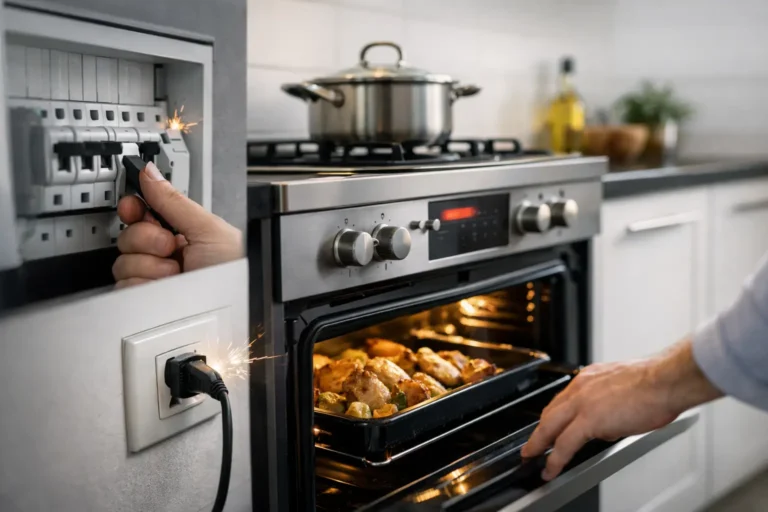
Do not remove the rear panel, attempt to replace an element without isolating the appliance correctly, or continue using an oven that trips the circuit. If you smell burning insulation, see smoke, or notice damaged wiring, switch the oven off at the isolator if it is safe to do so and arrange professional help. For gas ovens, any work involving the gas supply must be carried out by a Gas Safe registered engineer.
Is an oven heating fault worth repairing?
It depends on the appliance age, the failed part and the overall condition of the oven. A replacement element, thermostat, fan motor or door seal is often a sensible repair, particularly on a quality built-in oven that is otherwise reliable. These faults are usually contained and do not automatically mean the appliance is beyond economical repair.
The calculation changes if an older oven has several faults, extensive corrosion, damaged wiring or an expensive control board alongside worn seals and hinges. A professional diagnosis gives you the information to decide with confidence rather than spending money on a speculative fix. Ask for the fault explanation, the parts required, the total price and the warranty provided before authorising work.
Get the fault diagnosed without the guesswork
Oven heating faults are frustrating because similar symptoms can have very different causes. Replacing a visible element may not solve a selector, sensor or control-board problem, and repeated DIY attempts can create additional damage.
For households in West London, CrownTech Appliances provides in-home diagnosis and repair for electric ovens, with certified engineers, fixed-price quotes and a 12-month written parts and labour warranty. A proper test identifies the failed component and gives you a clear next step, whether that is a straightforward repair or an honest recommendation to replace the appliance. The quickest route back to reliable cooking is to stop guessing at the fault and have the oven tested properly.